
Last updated September 20, 2026
Free on-site gate assessment - hinges, posts, and your LiftMaster or Nice gate operator checked before anything is quoted
The assessment is free and the quote is the invoice.
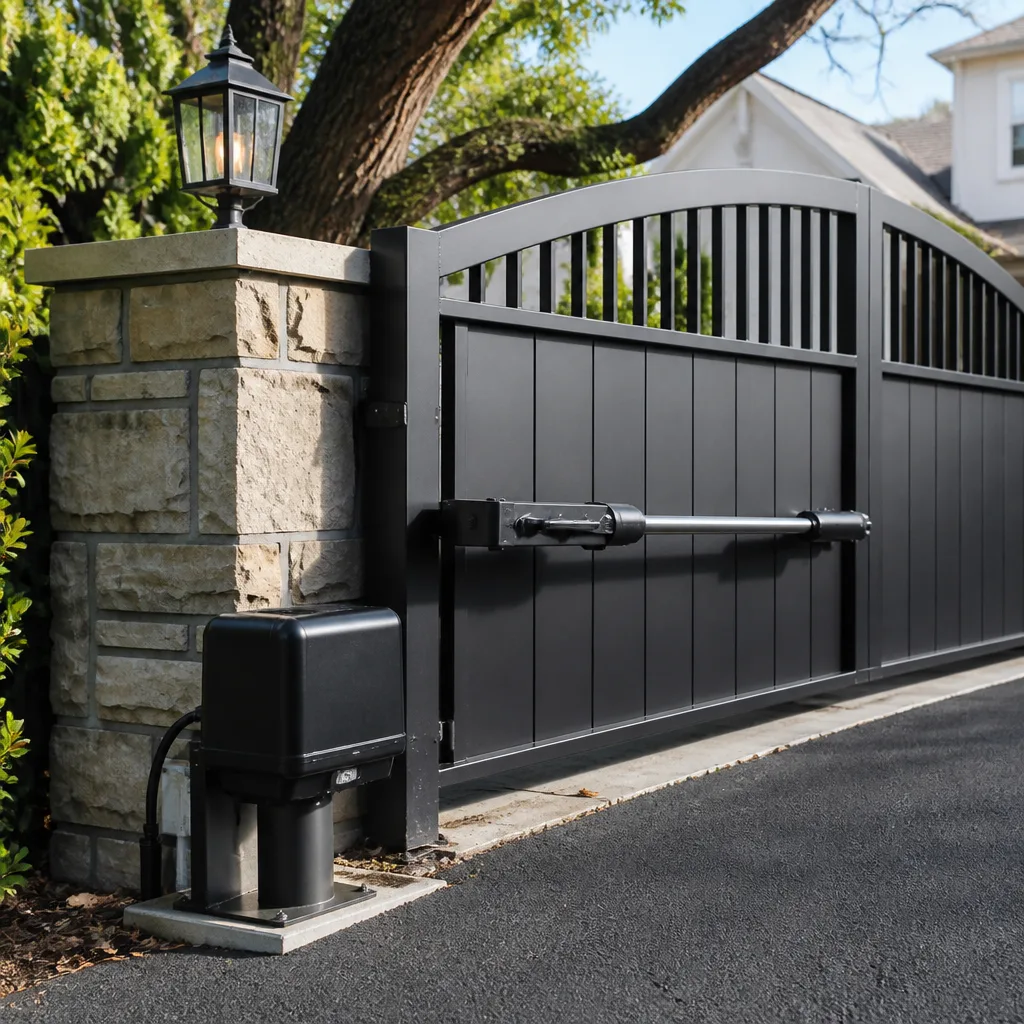
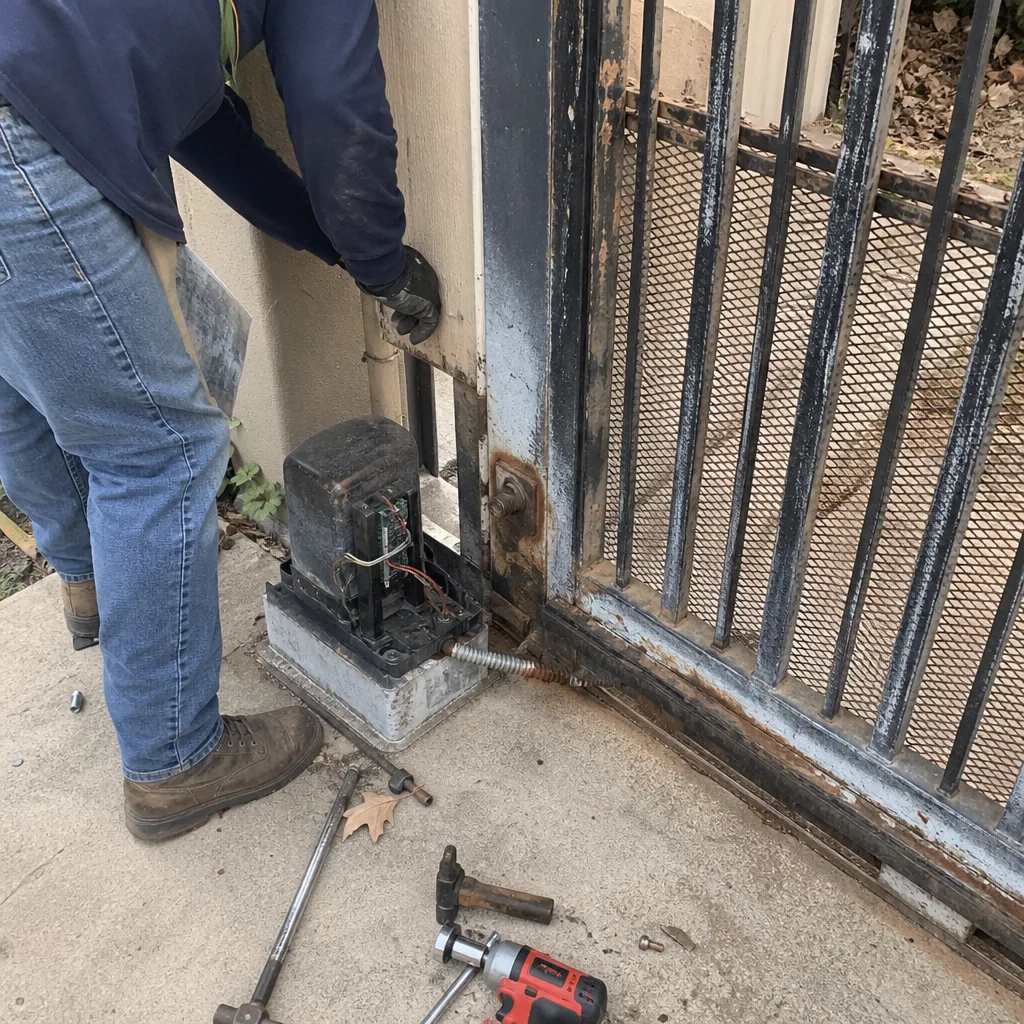 Before
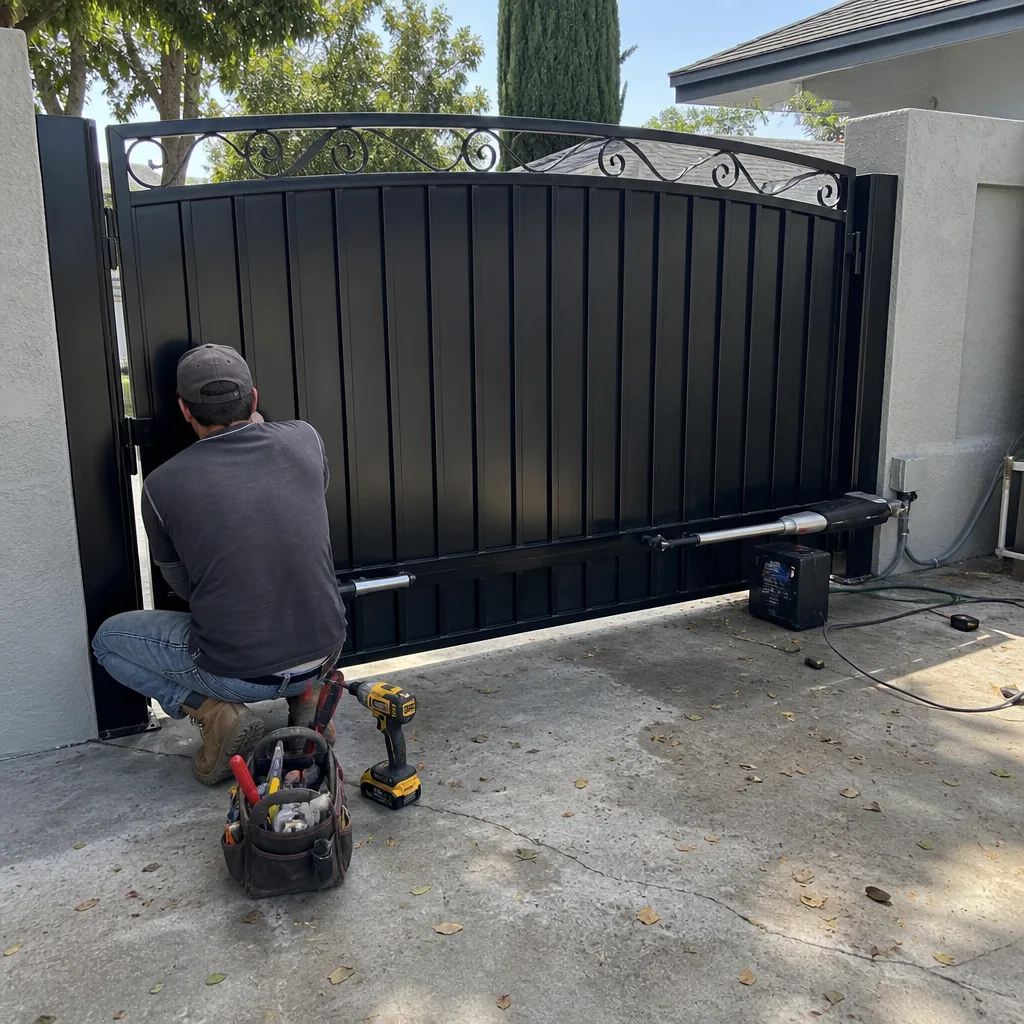 After
After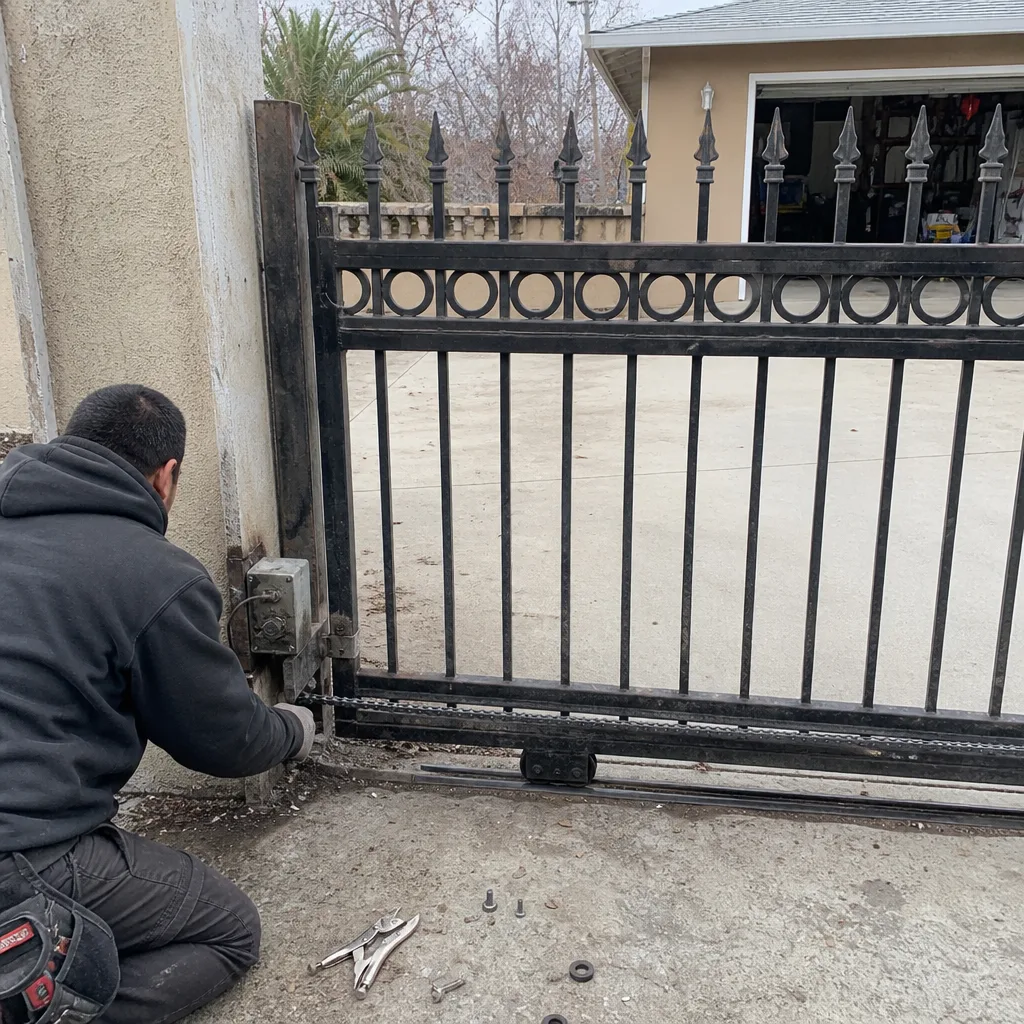 Before
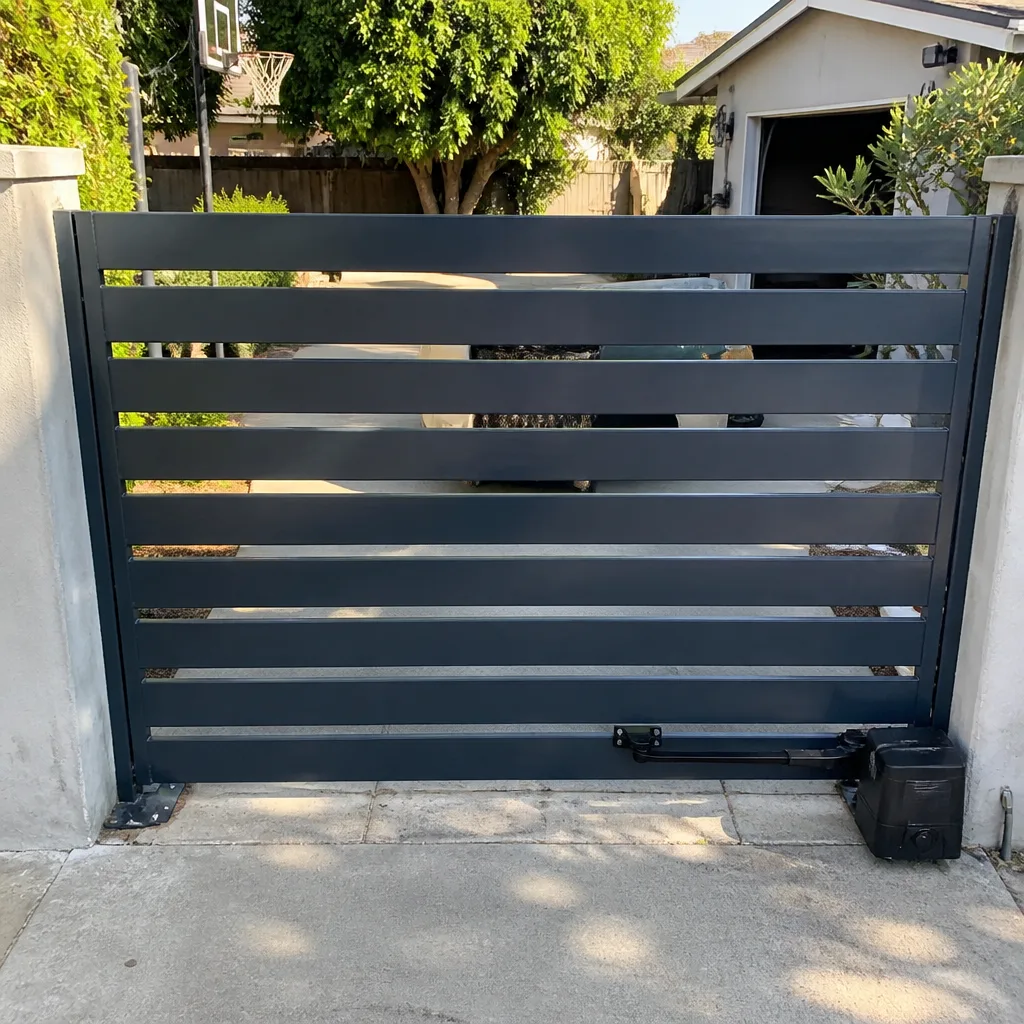 After
After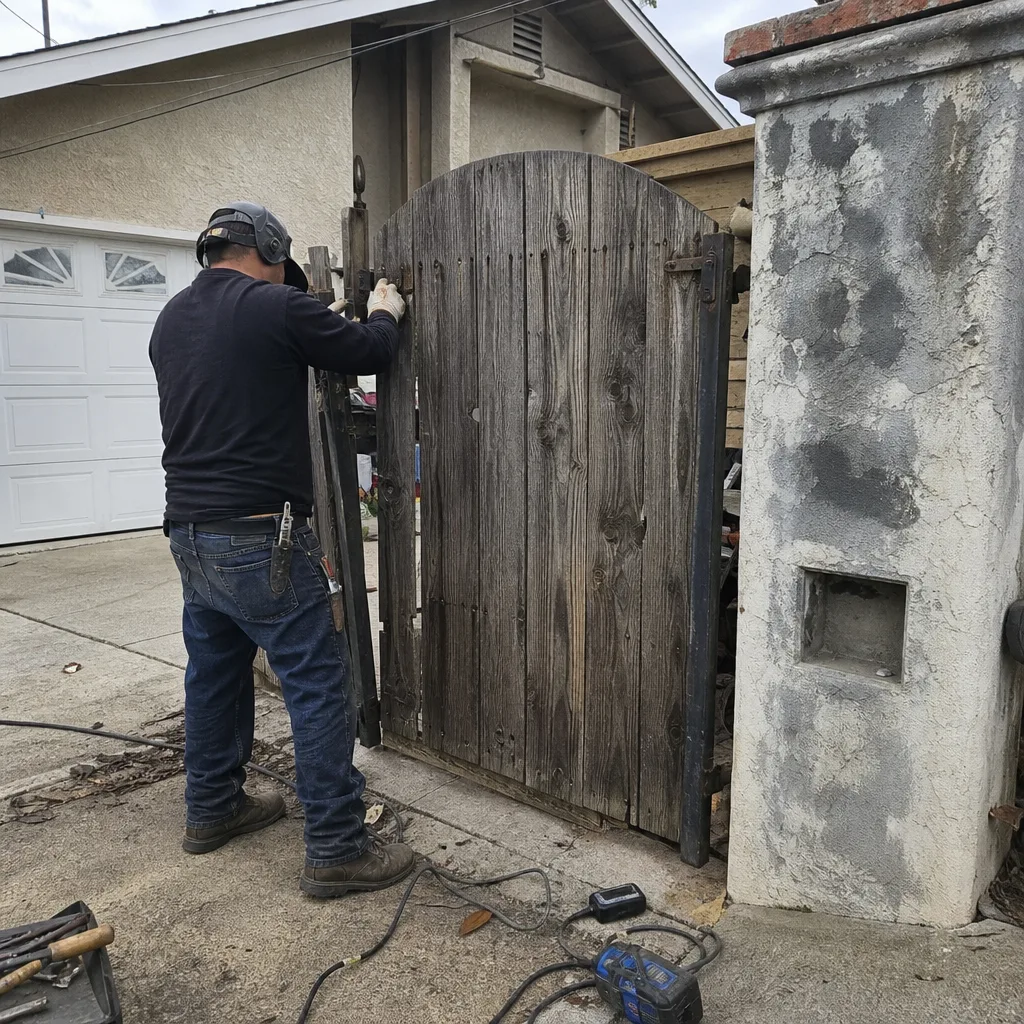 Before
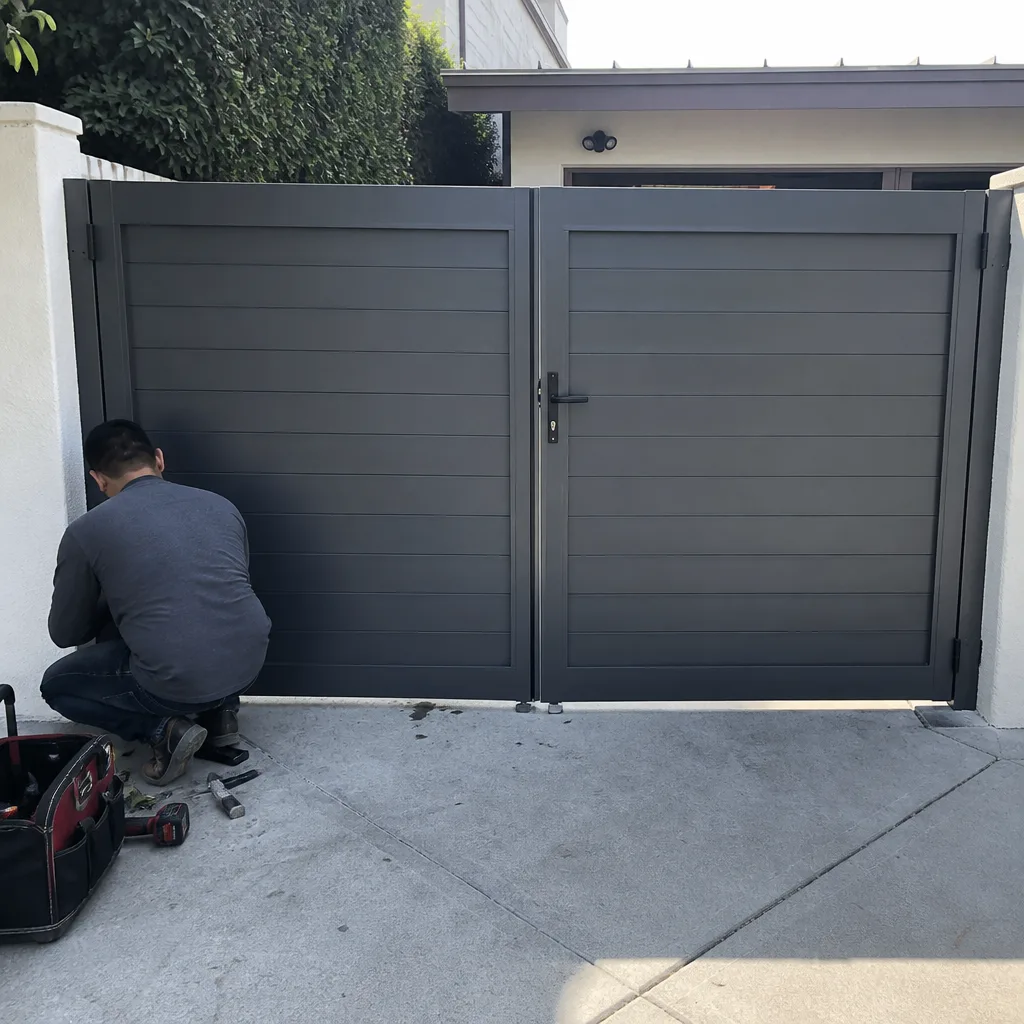 After
AfterGate Repair Warning Signs: A North Hollywood Homeowner’s Reference Guide
A gate that hesitates for half a second before moving is not “a little slow.” It’s a motor drawing excess current against a resistance it can no longer overcome cleanly, and that reading, taken at the right moment, tells you exactly how much time you have before it stops moving altogether. Most North Hollywood homeowners don’t get stranded by a gate that failed suddenly. They get stranded by a gate that whispered for six months first. This guide covers what those whispers sound like, what they mean, and how to record them so a technician can act on evidence instead of guesswork.
Quick Answer
The most common gate repair warning signs in North Hollywood are: a gate that hesitates before moving, a motor that runs louder than it did six months ago, a gate that reverses mid-travel, rust bubbling under paint, and intermittent operation that comes and goes. Any one of these means the gate is telling you something specific, and most escalate from nuisance to full failure within weeks, not months. If your gate shows any of these signs, call Vance Gate Repair North Hollywood at (213) 566-1045 for a written estimate before work begins.
Table of Contents
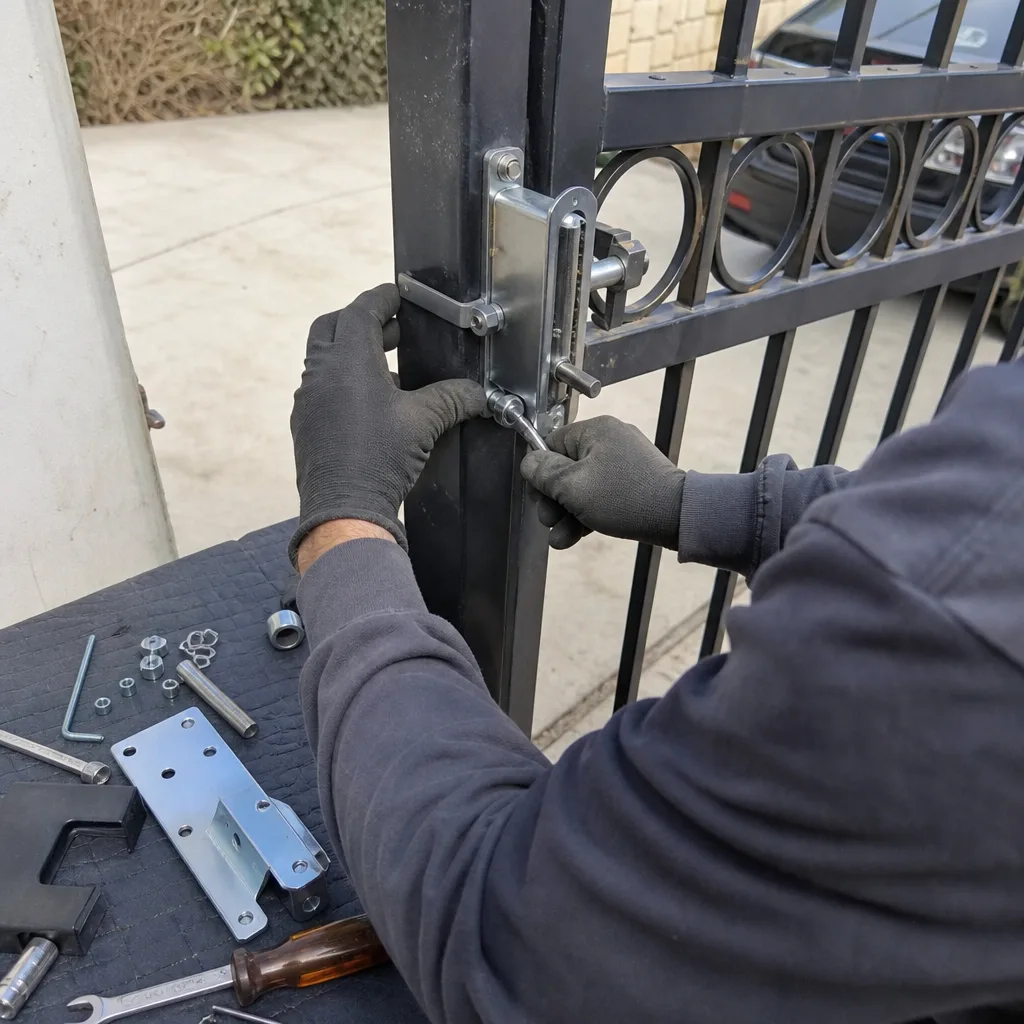
- Operator Sounds: What’s Normal Wear, What’s a Countdown
- Intermittent Operation: Nine Out of Ten Is Not Fine
- When Your Gate Reverses Unexpectedly: The Three Causes Ranked
- Visual Warning Signs Specific to North Hollywood Conditions
- How to Document a Warning Sign in 5 Minutes
- What Warning Signs Cost to Fix vs. What They Cost to Ignore
- The Gate That Works Nine Times Out of Ten: Why Homeowners Wait
BeforeAfterOperator Sounds: What’s Normal Wear, What’s a Countdown
Gate motors make noise. That’s not a defect; it’s a gear train, a belt or chain drive, and a steel arm all doing mechanical work. The question is not whether your gate makes sound. The question is whether the sound has changed, and in what direction. A gate operator that has run for five years will not be silent. But a gate operator that was a low hum last April and is now a grinding rattle in October is not “getting old.” It’s broadcasting a specific mechanical event.
Here’s the distinction we use on service calls, and it’s one you can apply at home without any tools:
- Normal wear: a steady, consistent hum that rises slightly under load (when the gate is heaviest, usually mid-travel on a swing or at the first lift on a slide). It should not fluctuate in pitch, stutter, or produce high-frequency squeal. A gradual, barely noticeable volume increase over years is normal gear bedding.
- Imminent failure: any new clicking, grinding, rattle, or a change in pitch that happens at the same point in every cycle. A click that repeats at the same physical spot means a gear tooth, a chain link, or a limit switch is involved. A rattle that changes with the gate’s position means a mounting bolt, hinge, or bracket has loosened. A grinding that started within the last month is metal on metal, usually a worn gear or a bearing with no lubrication left.
We’ve pulled apart gate operators in North Hollywood where the owner thought the motor was “a little noisier than usual.” The gear housing was full of metal powder. The motor hadn’t failed, but the gear set was 80% gone, and every additional cycle was making the replacement more expensive because the shaft was starting to score. The noise was the cheapest diagnostic signal on the property, and it was being treated as an annoyance instead of data.
What Each Sound Typically Means
- High-pitched squeal, brief, at the start of travel: belt or chain tension issue, or a dry bearing in an FAAC or BFT swing-arm operator. Usually repairable before the belt breaks or the bearing seizes.
- Repetitive click, same position, every cycle: limit switch out of adjustment or a bad limit-switch microswitch. The motor doesn’t know where to stop, so it overshoots and the switch chatters. This is a service call, not a replacement.
- Deep grinding, worsening over weeks: gear wear. LiftMaster and Elite slide-gate operators run gear sets that wear predictably under North Hollywood’s fine dust. The dust settles into the grease, the grease becomes a grinding paste, and the gear wears faster than the manufacturer’s schedule predicts.
- Rattle, metal on metal, irregular: loose mounting hardware. A gate that shifts by even a few millimeters changes the load geometry, and the rattle is the motor bracket or hinge trying to tell you.
Record a video of the gate opening and closing, with the phone about four feet from the operator housing. That 20-second clip tells a technician more than a phone description ever will, and it’s the first thing we ask for when North Hollywood customers call about a noisy operator.
Intermittent Operation: Nine Out of Ten Is Not Fine
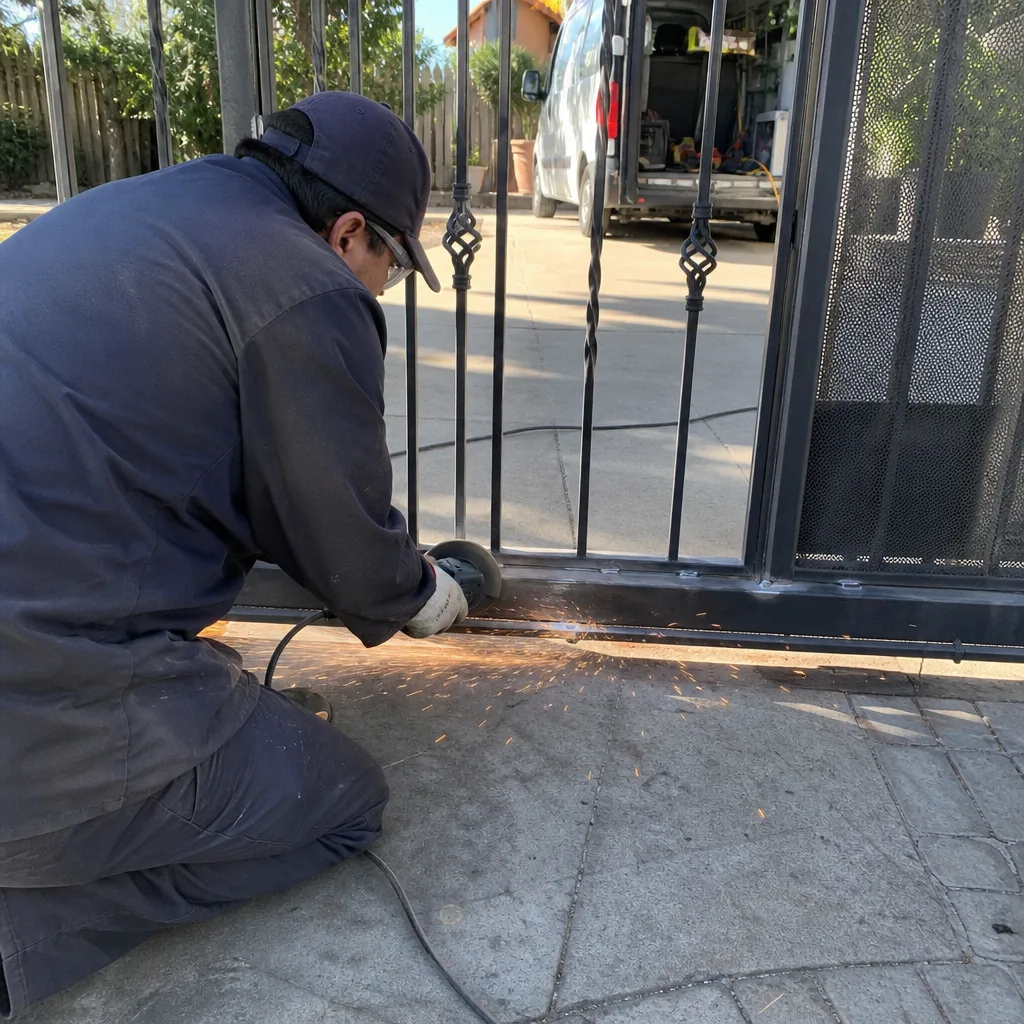
We get this call constantly: “The gate didn’t open yesterday, but now it’s fine, so I think it was just a fluke.” A gate that works nine times out of ten is not a gate that works. It’s a gate that fails on a schedule you haven’t decoded yet, and the next failure will be at the worst possible hour because that’s when the underlying cause is most likely to trigger.
Intermittent failure is diagnostic data. The pattern tells you what to look for. Here’s how we interpret the patterns we see in North Hollywood:
- Fails in the morning, works by afternoon: Moisture or condensation. North Hollywood’s marine-layer mornings put dew on photo-eyes and control boards. A photo-eye with a dirty lens or a control board with a micro-crack short-circuits in the morning and dries out by noon. This is also a classic sign of a failing capacitor, which does not hold a charge as well when cold.
- Fails when the sun hits the photo-eye directly: Infrared washout. A photo-eye (the infrared beam that stops the gate if something crosses the path) can be blinded by direct low-angle sunlight, especially on west-facing gates in the afternoon. The gate refuses to close because it can’t confirm the path is clear. Relocating or shading the photo-eye fixes this, usually same-day.
- Fails after heavy rain or irrigation: Water intrusion into a junction box, a motor housing, or a keypad. North Hollywood sprinkler systems are a frequent culprit: a spray head aimed at the gate post rots the insulation on low-voltage wiring within a season. The gate works when dry and fails when the wire jacket stays wet for 12 hours.
- Fails randomly, at any time, no pattern: Loose connection or failing relay on the control board. A terminal that has vibrated loose from years of gate cycling makes contact most of the time and breaks contact when the gate pauses at a particular flex point.
The common thread is that none of these fix themselves. They all get worse, but not in a straight line. A loose connection will work for two months, then fail on a Saturday night, then work again Monday morning. The homeowner cancels the service call because “it’s working now.” The problem stays in the system, waiting for the next random vibration to break the connection again.
We treat an intermittent gate as a live fault, not a mystery. Our technicians photo-document every connection they touch, read the limit-switch position, and leave you with a written record of what was found, so the problem does not come back as a guess.
When Your Gate Reverses Unexpectedly: The Three Causes Ranked
A gate that starts to close, stops, and then reverses back open is executing a safety response. Sometimes that response is correct (something was in the path). More often, in our North Hollywood service record, the reversal is the gate’s way of announcing that one of three systems is no longer reading the world accurately. Here they are, ranked by how fast each escalates.
1. Photo-eye misalignment or obstruction (escalates: hours to days, low severity). The photo-eye is the infrared beam that watches the gate path. If a sprinkler head, a car bumper, a trash can, or seismic settling shifted the gate post by even half an inch, the beam breaks, and the gate reverses. This is the most common cause and the cheapest fix. We recently repositioned a photo-eye on a Mighty Mule slide gate in North Hollywood that was throwing a fault only when the afternoon sun hit it at exactly 17 degrees. The fix took 20 minutes.
2. Force-sensitivity setting out of adjustment (escalates: days to weeks, medium severity). Every gate operator has a sensitivity setting: how much resistance the motor will push against before it gives up and reverses. If a hinge is stiffening, a wheel bearing is dragging, or the gate is dragging on a cracked concrete runner, the motor feels more resistance than it should. It interprets that resistance as an obstruction and reverses. The symptom is a reversal that happens at the same physical point in the travel, often after the gate has been working for years. The cause is usually mechanical drag, and ignoring it turns a lubrication job into a motor replacement.
3. Motor capacitor or control board failing (escalates: days to irreversible, high severity). A failing start capacitor gives the motor a weak initial kick. The motor strains, the load sensor trips, the gate reverses. A failing relay on the control board reads a false obstruction and behaves the same way. Both get worse fast because the failing component is under stress every cycle. A LiftMaster operator with a failing capacitor in North Hollywood this spring went from occasional reversal to dead board in nine days.
If your gate reverses and there is nothing in the path, keep a note of the exact position where the reversal happens. That position is the diagnostic key. A reversal at the same spot every time is almost never a control-board problem. It’s mechanical, and it’s fixable without replacing the operator if you catch it before the motor burns out.
Visual Warning Signs Specific to North Hollywood Conditions
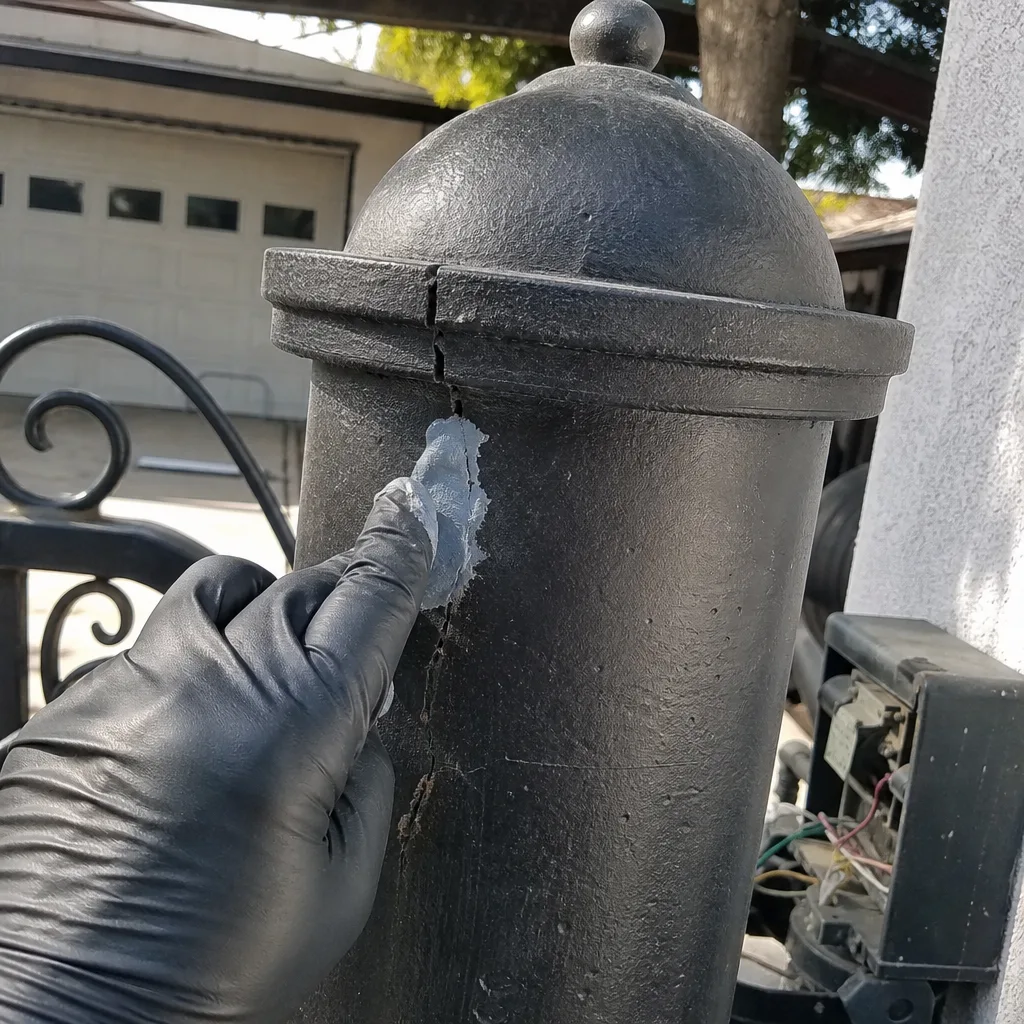
North Hollywood is hard on gates in ways a San Fernando Valley summer is hard on everything: UV radiation, fine alkaline dust, temperature swings, and irrigation overspray. The visual signs of gate trouble here are different from a coastal city like Santa Monica or a dry inland city like Palmdale, so it’s worth knowing what your specific environment does to steel, powder coat, and concrete.
Rust: Water Intrusion vs. Surface Oxidation
Every steel gate in North Hollywood eventually shows surface rust. That’s a cosmetic fact, not an emergency. The difference lives in where the rust is and what shape it takes. Surface oxidation is widespread, thin, and powdery; it sits on top of intact steel. Water intrusion rust is localized, thick, and flaky, and it appears at seams, welded joints, the bottom rail, and anywhere two pieces of metal meet. If you see rust flakes swelling out of a seam, water has gotten inside the tube and is corroding the gate from the inside. That’s structural, and it worsens every time the sprinklers run. A gate with water inside a horizontal rail freezes its rust in place and keeps weakening the wall thickness, which is how a gate that looked fine on the outside snapped at the hinge plate last year in Valley Village.
Rule of thumb: rust you can wipe off with a finger and see smooth steel underneath is surface oxidation; rust that feels like a scab and sheds flakes when scratched is water intrusion. The first is a repaint. The second is a repair, and it needs an inspection before the section has to be cut out.
Concrete Crack Patterns That Predict Hinge Stress
Swing gates hang from their hinges, and their hinges anchor to posts, and their posts anchor to concrete. When the concrete starts to crack, the gate starts to sag, and a sagging gate changes the load on the motor, the hinges, and the brackets. Here’s the pattern to watch for: hairline cracks radiating outward from the gate post base, especially on the side opposite the gate’s swing direction. The gate pulls the post every cycle, and the post pulls the concrete, and the concrete eventually cracks in a starburst around the anchor bolts. In North Hollywood, where older homes often have 3,000-psi driveway concrete with no rebar, this can happen within five years of a new gate installation. If the crack is wider than a dime and fills with dirt after rain, the post is moving, and every cycle is widening it.
Paint Bubbling That Reveals Delamination
Paint bubbles on a gate are not a paint problem. They’re a moisture problem. Powder coat and paint bubble when water in the steel tries to escape through the coating as vapor. If you see small, hard blisters on the lower third of the gate or along the bottom rail, water is already inside the tube. The panel is delaminating from the inside. By the time the bubbles crack open and bleed rust streaks, the steel wall behind them is thinner than the surrounding metal, and hammering on the bubbled area with a screwdriver handle sounds hollow or crunchy instead of solid. That gate needs a welder, not a painter, and the longer it sits, the more panel section has to be replaced rather than patched.
How to Document a Warning Sign in 5 Minutes
The difference between a $200 service call and a $2,000 repair in North Hollywood is often the quality of the evidence the homeowner brings to the table. A technician who arrives to “the gate is making a weird noise” has to start from zero and find the problem by observation. A technician who arrives to a photo, a video, and one sentence about what triggered the event has a lead. Here’s what we ask every customer to record, and it takes less time than a coffee run.
- Take one photo of the gate in the position where the symptom happened, with the operator housing, hinges, or photo-eye visible. Aim for three details: where the gate is, where the damage or noise appears to originate, and what the surrounding area looks like (sprinklers, plants, car position).
- Take one 15-second video of the gate cycling. Hold the phone still and close enough that the audio is clear. The motor’s sound is a diagnostic tool, and a phone microphone held four feet from the operator captures enough detail for us to hear the difference between a gear and a bearing.
- Note the date and time of the symptom, in one line. “October 14, 7:20 am, gate reversed at the halfway point, sprinklers had run overnight” tells us more than a paragraph of description.
- Note what triggered it and how it resolved: “Gate wouldn’t close from the keypad, but worked from the remote. Next morning everything worked.” Or: “Gate reversed, then closed normally on the second attempt.” The pattern is the diagnostic gold.
- Keep the record in one place on your phone. Every time the symptom repeats, add a line. Within two or three repetitions, a pattern emerges, and a pattern is what lets a technician fix the problem instead of reproducing it.
Under Clause 4 of The Haven Standard (Evidence on every job), our technicians leave you with the same kind of record in reverse: photographed findings, written adjustment readings, and a clear list of what was done and what remains to be watched. The idea is that no future technician, at our company or another, ever has to guess what happened on the last visit.
What Warning Signs Cost to Fix vs. What They Cost to Ignore
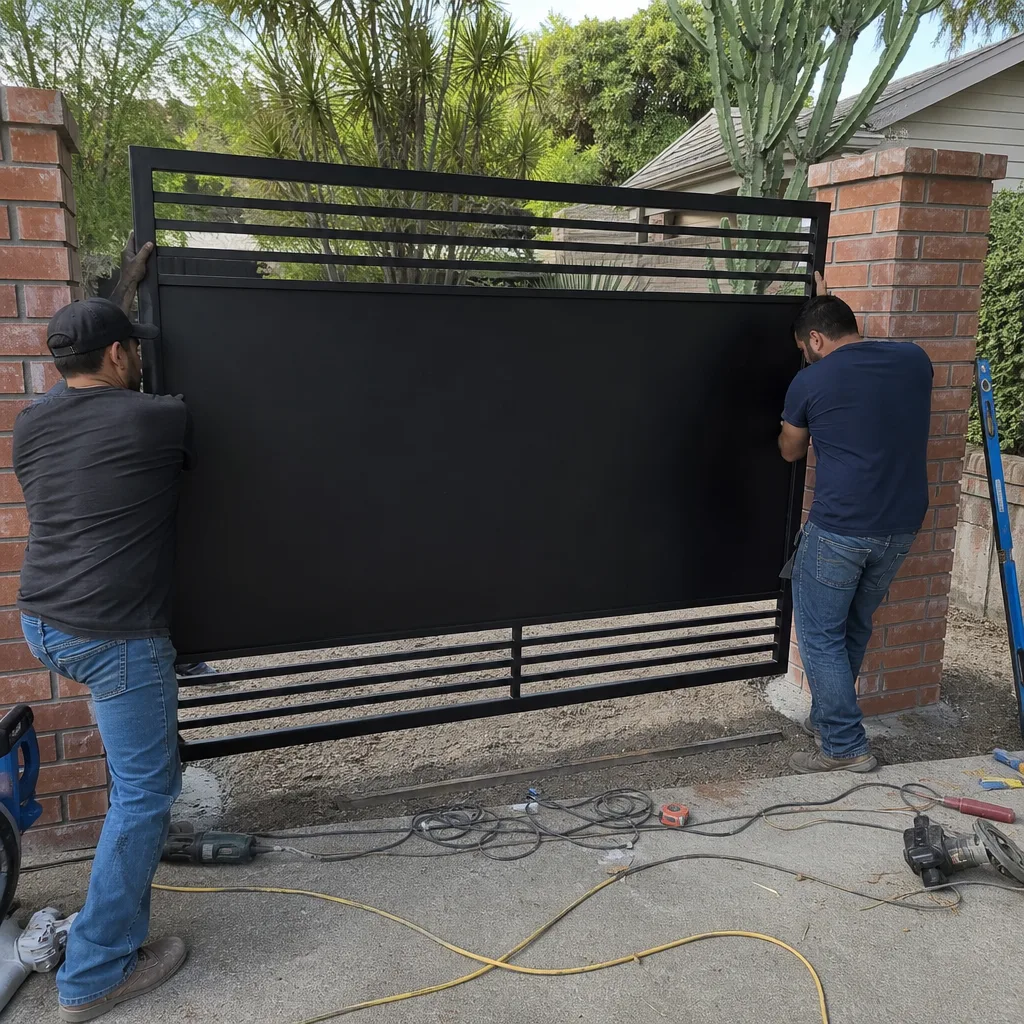
Call it the asymmetry of gate repair. The numbers below are ranges we see in North Hollywood, and every one is quoted in writing before work starts.
- Photo-eye realignment or cleaning: $85-$175, usually same-day. If ignored, the gate may refuse to close, then fail the safety inspection, and a force-sensitivity bypass (a common DIY “fix”) can injure a pet or child and burn out a motor. The cheap fix never stays cheap when it’s skipped.
- Limit-switch adjustment or replacement: $125-$275. Ignoring it lets the gate overshoot, which bends the stop, then the bracket, then the rail, and then the motor is pushing against a bent assembly. The limit switch is the cheapest part in the system. The parts it destroys are the most expensive.
- Hinge or bracket lubrication, tightening, or replacement: $90-$450 depending on how far the sag has gone. If the gate sags far enough to drag the ground, the motor’s load doubles, and the operator burns out. A $150 hinge job that prevents a $1,800 motor replacement is the best money in gate ownership.
- Gear or bearing replacement inside an operator: $350-$850, depending on the operator brand and internal condition. This is the repair that goes from feasible to impossible when ignored for too long; a gear that shed metal into the motor shaft destroys the shaft, and the operator becomes scrap instead of rebuilding.
- Full swing-gate operator replacement (repair no longer possible): $1,400-$2,600, depending on the brand and arm configuration. By contrast, a gate owner who calls at the first grinding sound often gets out for $400. The difference is response time, and the difference is documented in our files every week.
- Weld repair for a cracked post, hinge plate, or rail due to rust/delamination: $200-$800. The same crack ignored for a season becomes a gate that falls on a car or a person, and then it’s not a weld repair, it’s an emergency replacement.
North Hollywood’s hard water, dense morning dew, and summer UV mean these problems appear on a schedule here, not randomly. The gate that survived 12 years in the high desert will show rust through its bottom rail in six seasons in North Hollywood. Every season you wait after a warning sign doubles the eventual bill, on average. That’s not a scare statistic; it’s our service data, and we’ll show you the before-and-after photos on request. For an exact quote on what your gate’s warning signs mean in dollars, call (213) 566-1045. The estimate is free, and it’s in writing before anything gets touched.
The Gate That Works Nine Times Out of Ten: Why Homeowners Wait
We’ve been doing this in North Hollywood since 2014, and the pattern is constant. The homeowner hears the first weird sound in March. The gate works fine the next ten times. The sound comes back in May, a little louder. The gate works fine the next twenty times. The homeowner tells themselves it was a heat thing, a dirt thing, a one-time thing. The gate fails for good on a Sunday night, usually when a car is in a hurry to get out, and the repair call becomes an emergency with an emergency price.
Every part of a gate system is designed to announce its own failure. The gear grinds before it strips. The hinge sags before it tears out of the post. The capacitor weakens before it dies. The limit switch chatters before it fails. The photo-eye blinks before it goes dark. None of these announcements are subtle once you know what you’re listening to. Most are audible, visible, or recordable by a homeowner who knows to pay attention.
The gate repair industry in Los Angeles runs on the fact that people don’t listen. Independent operators like Vance Gate Repair run on the fact that some people do. The customer who writes down the date and the video is the customer who gets a $300 repair before it becomes a $2,800 replacement. The customer who waits gets the Sunday-night emergency, and the emergency is always the more expensive version of the same repair. That’s not a sales pitch. It’s the same math we run ourselves as a business, applied to a 22,000-job service record.
If your gate is at the point where repair is no longer the right investment, a replacement starts with the same written-price discipline: a measured quote, an honest recommendation about what can be saved, and no pressure to replace what could be fixed. But the best gate repair in North Hollywood is the one you catch at the first noise, not the one you schedule after the gate refuses to move at midnight.
Common Mistakes to Avoid
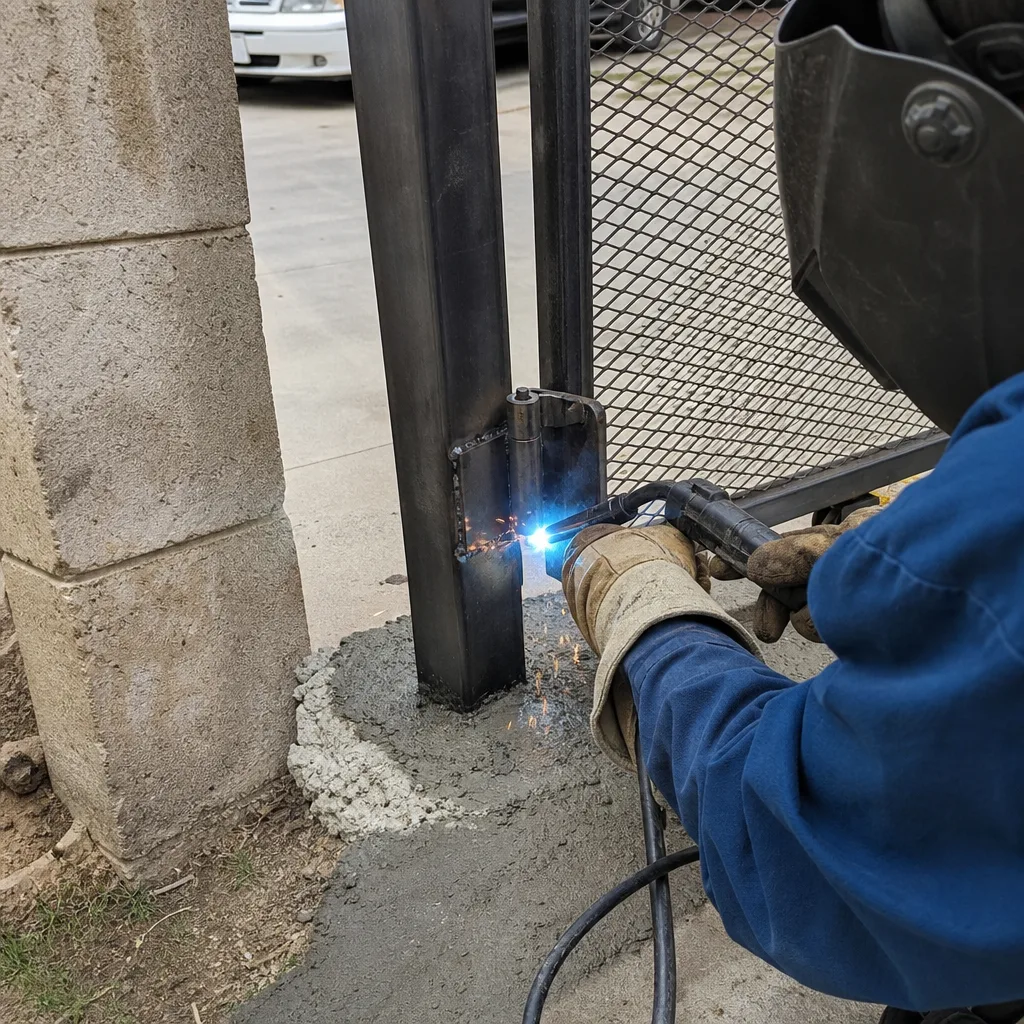
- Spraying the gate hinges with WD-40 and calling it maintenance. WD-40 is a solvent, not a lubricant. It washes away the existing grease and leaves the hinge drier than before. A proper lithium or silicone gate lubricant, applied twice a year, is the routine that keeps hinges from stiffening and motors from fighting a sagging gate.
- Adjusting the force-sensitivity dial to “fix” a reversing gate. When a gate reverses because the photo-eye is blocked, the correct fix is to find the obstruction. Crank the sensitivity up, and the gate will close through a real obstruction. That is how pets and children get hurt, and it’s also how motors get burned out pushing through a load they were never designed to fight.
- Waiting until the gate stops working to schedule a service call. The repair window is widest at the first symptom. Every week of delay narrows it. A grinding gear that costs $400 to rebuild in March is a $1,800 operator replacement by September. You are not saving money by waiting; you are making the repair more expensive every time the gate cycles.
- Ignoring paint bubbles because “it still works.” Paint bubbles on the bottom rail are not a cosmetic issue. They are water intrusion, and the steel behind them is thinning. Paint over the bubble and the rust expands invisibly until the panel cracks. A $200 sand-and-seal in the first season is a $700 panel replacement in the third.
- Replacing the entire system when one component fails. A dead capacitor in a LiftMaster operator does not mean the operator is dead. A cracked hinge does not mean the gate is scrap. We service nine major gate-automation brands (LiftMaster, FAAC, BFT, Linear, Viking, Ghost Controls, DoorKing, Elite, Mighty Mule) specifically because the right repair is usually cheaper and longer-lasting than a replacement. If a company offers you a full replacement without opening the operator, get a second opinion. We’ll review any written estimate from another company at no cost.
- Documenting nothing and expecting the technician to “figure it out.” When you call us about an intermittent gate, our first question is “what was the weather, the time, and the position when it failed?” The customer who can answer that question gets a diagnosis in the first visit. The one who can’t pays for a technician to spend the first hour trying to reproduce an event that may only happen at 7 am with dew on the photo-eye. Your memory is the cheapest diagnostic tool you own.
When to Call a Professional
If your gate is making a new noise, hesitating, reversing with nothing in the path, or failing on a pattern, call now, not later. The service call is free, the estimate is in writing, and the diagnosis comes with a photograph record. A gate is not like a car, where you can drive it until it breaks and then fix it. A gate that breaks at the wrong moment is a security failure, a convenience failure, and sometimes a safety failure, all at once. If you’re anywhere in North Hollywood, our gate motor and opener service is a local call, and we answer the phone at (213) 566-1045 around the clock. No voicemail loop, no callback queue. A live person answers, and the price is written before work starts.
Frequently Asked Questions
Most gate repairs in North Hollywood run between $85 and $850, depending on the component. A photo-eye realignment is typically $85-$175, a limit-switch adjustment is $125-$275, a hinge or bracket repair is $90-$450, and a gear or bearing rebuild inside an operator is $350-$850. Full operator replacement runs $1,400-$2,600. Every price is quoted in writing before work starts, so the number on the estimate is the number on the invoice. Call (213) 566-1045 for an exact quote on your gate.
Yes, in most cases. We dispatch technicians across North Hollywood on the same day for repair and emergency calls, and someone answers the phone at (213) 566-1045 24 hours a day. Tell us what the gate is doing and we’ll tell you honestly whether it’s a two-hour job or a bigger repair, and what the written estimate will say before anyone arrives.
Our gate installation service in North Hollywood includes the site measure, a written scope and price, removal of an existing gate if needed, post setting, gate hanging, motor mounting and programming, and a final documented photo record. You get a wiring diagram and a photo log before the technician leaves, so any future technician can work on the system without guessing. Every installation comes with the Vance Gate Repair North Hollywood 365-Day Done Right Promise: if the installation isn’t right, we make it right within a full year at no charge.
That’s almost always photo-eye washout. The infrared beam that stops the gate when something crosses the path gets blinded by low-angle sunlight, usually on west-facing gates in the afternoon, and the gate reverses because it can’t confirm the path is clear. The fix is to shade, relocate, or aim the photo-eye, which takes about 20 minutes. Call (213) 566-1045 for a written estimate.
We service nine major gate-automation brands, including LiftMaster, FAAC, BFT, Linear, Viking, Ghost Controls, DoorKing, Elite, and Mighty Mule. That means we’ll work on whatever motor is already on your property, not steer you toward a replacement because it’s the only brand we carry. The right repair is almost always cheaper and faster than a full replacement.
For most repairs, yes, within a range. We’ll ask for a description or a 15-second video, and we’ll quote you a written range before the technician arrives. The final written price is delivered before any work starts, and if the gate needs something we didn’t see, we stop, show you the evidence, and get written approval before proceeding. You’ll never see an invoice bigger than the quote. Call (213) 566-1045 for a free estimate.
The Bottom Line
Gates in North Hollywood fail on a schedule, and the schedule is readable. The noise, the hesitation, the reversal, the rust, the bubbles: each one is a specific message from a specific component, and each one gets more expensive every time you ignore it. The homeowners who listen, document, and call at the first symptom are the ones who spend $300 instead of $2,800. The ones who wait for the gate to die spend the emergency price and lose a Sunday night. Every gate we’ve repaired since 2014 has had a story written in its parts before we arrived. The only question is whether anyone read it. If your gate is talking, call Gate Repair in North Hollywood at (213) 566-1045. We’ll listen, write down what we find, quote you a flat price, and leave you a photo record before we go.
Written by Adrian Vance, Owner at Vance Gate Repair North Hollywood, serving North Hollywood since 2014.