
Last updated September 20, 2026
Free on-site gate assessment - hinges, posts, and your LiftMaster or Nice gate operator checked before anything is quoted
The assessment is free and the quote is the invoice.
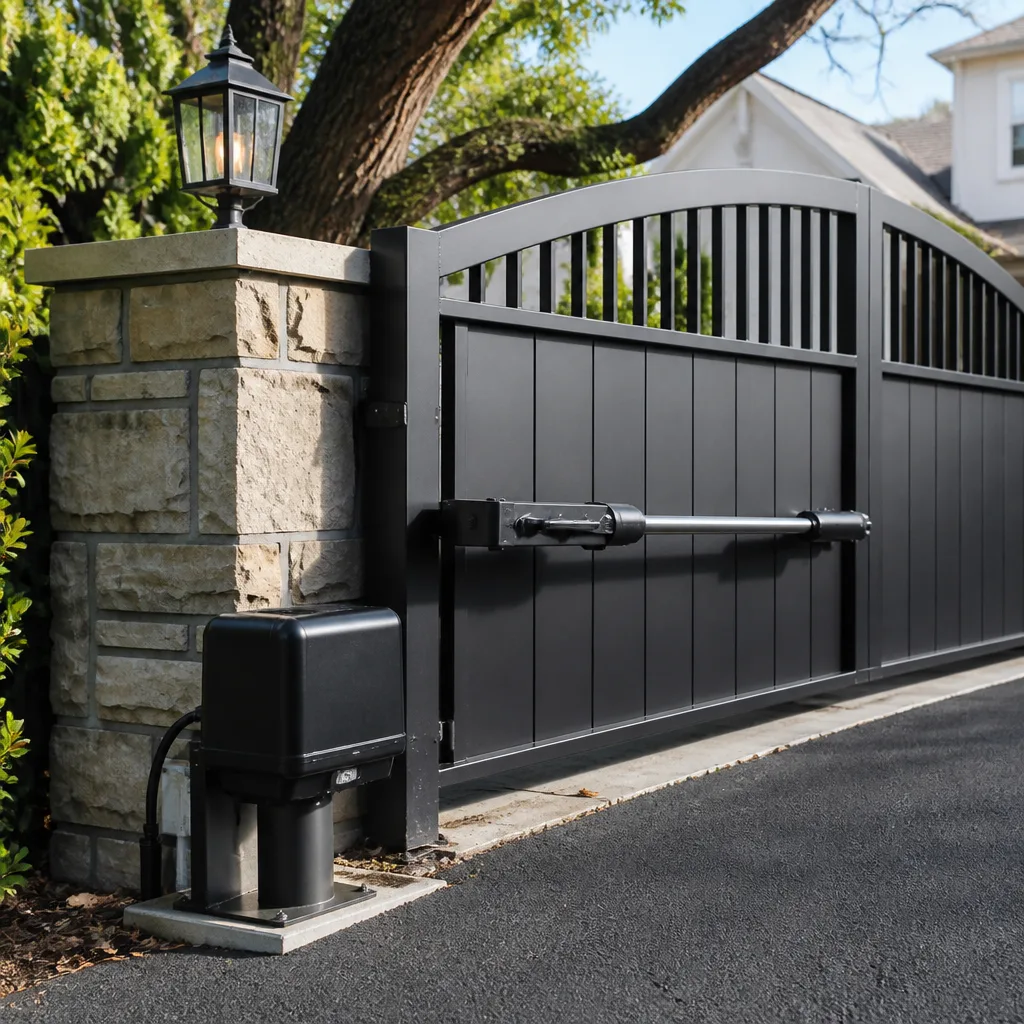
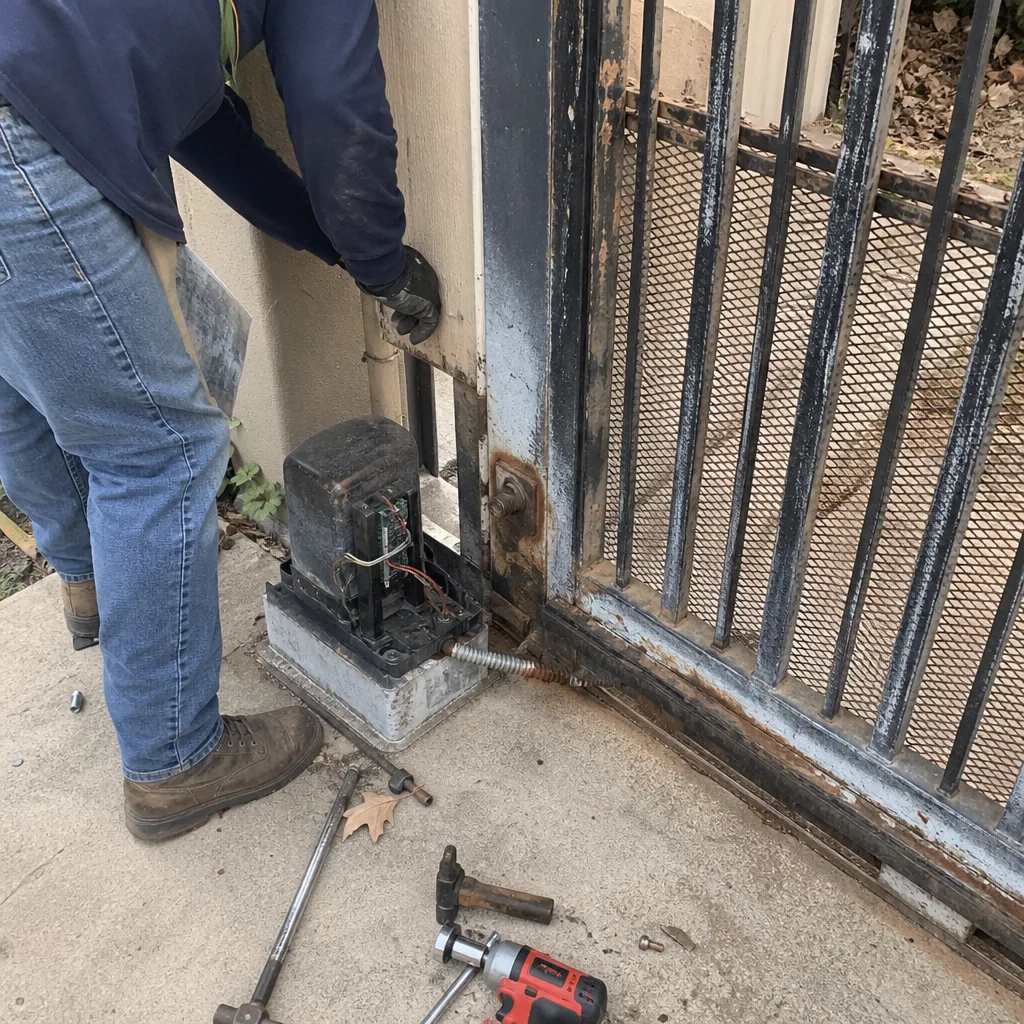 Before
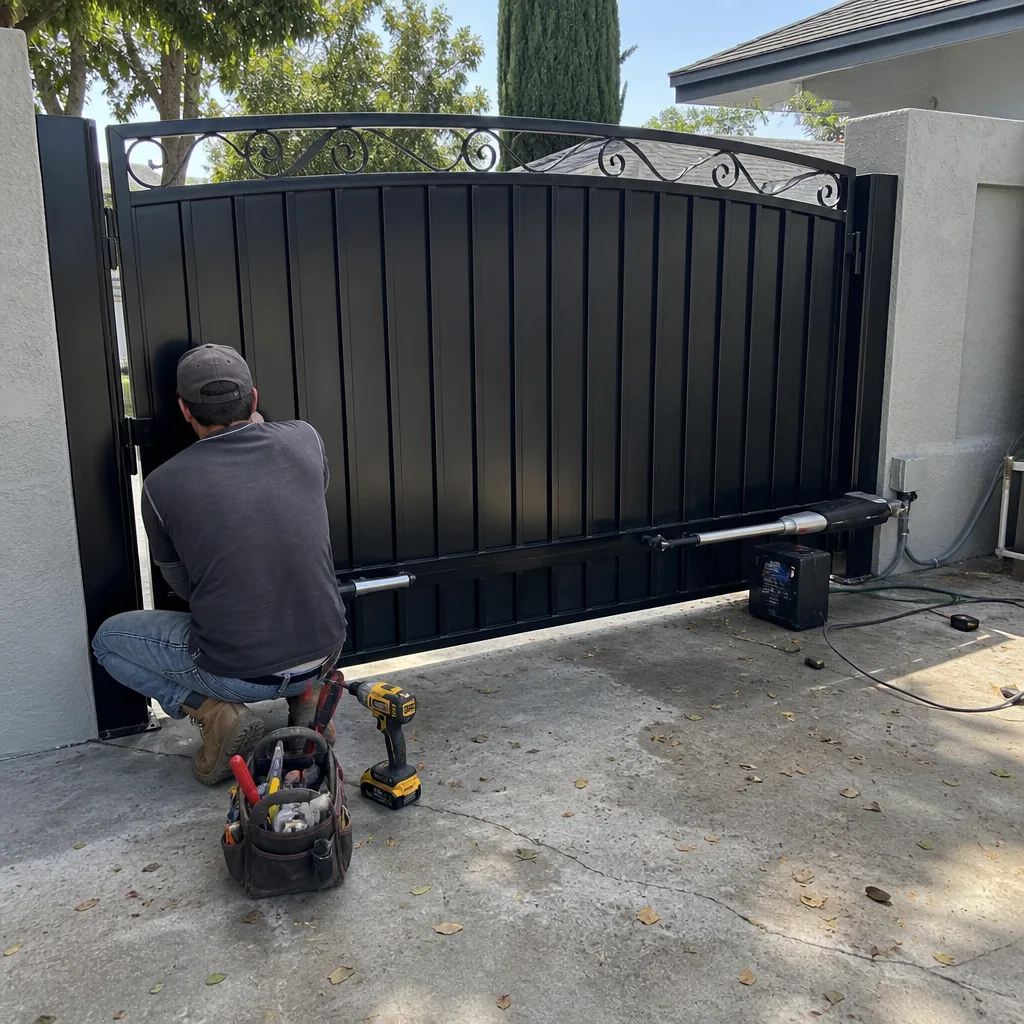 After
After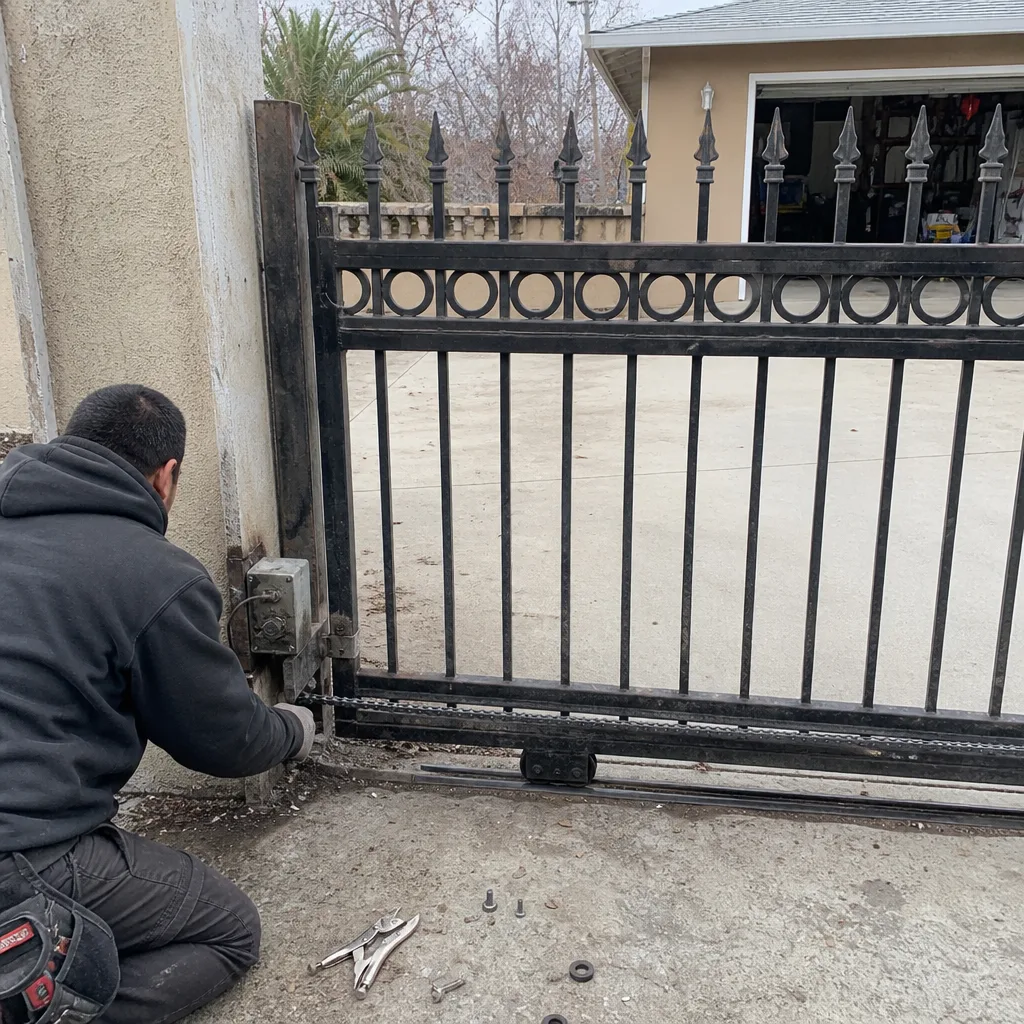 Before
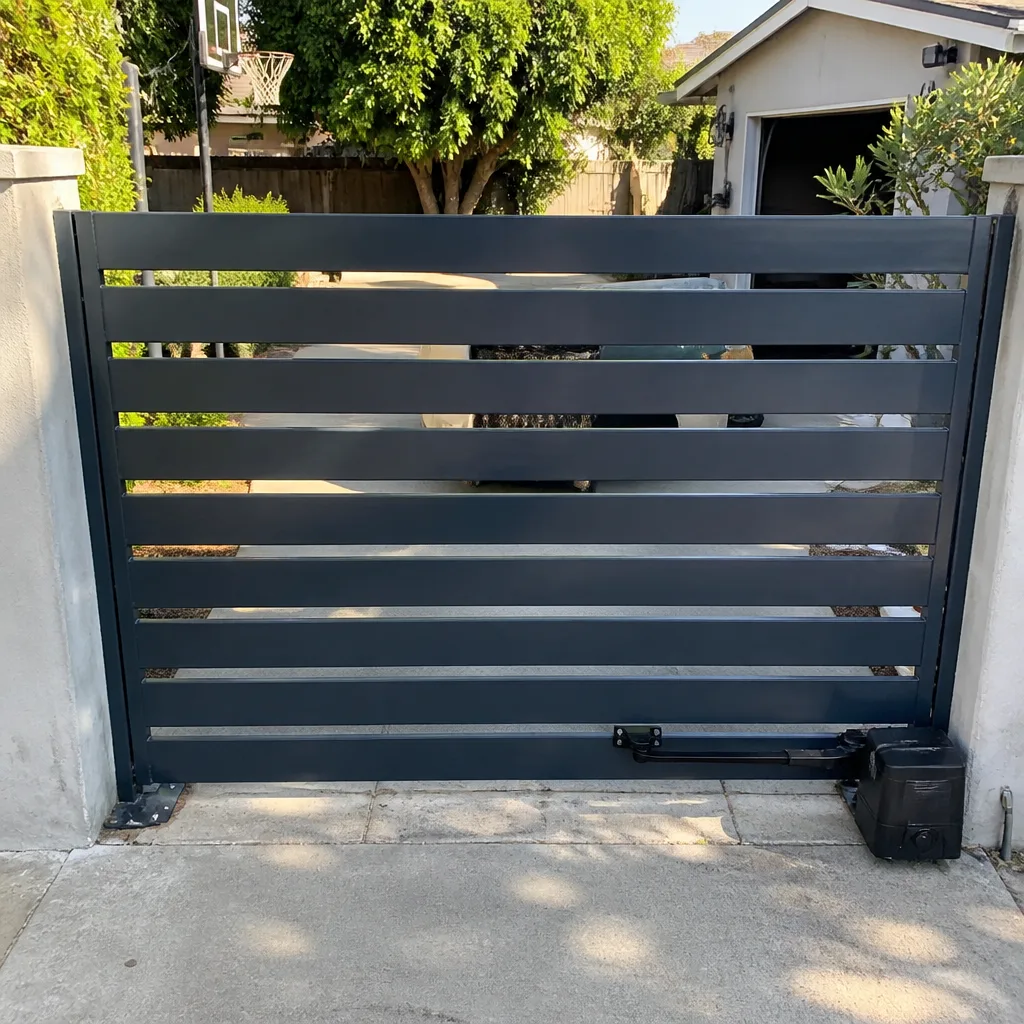 After
After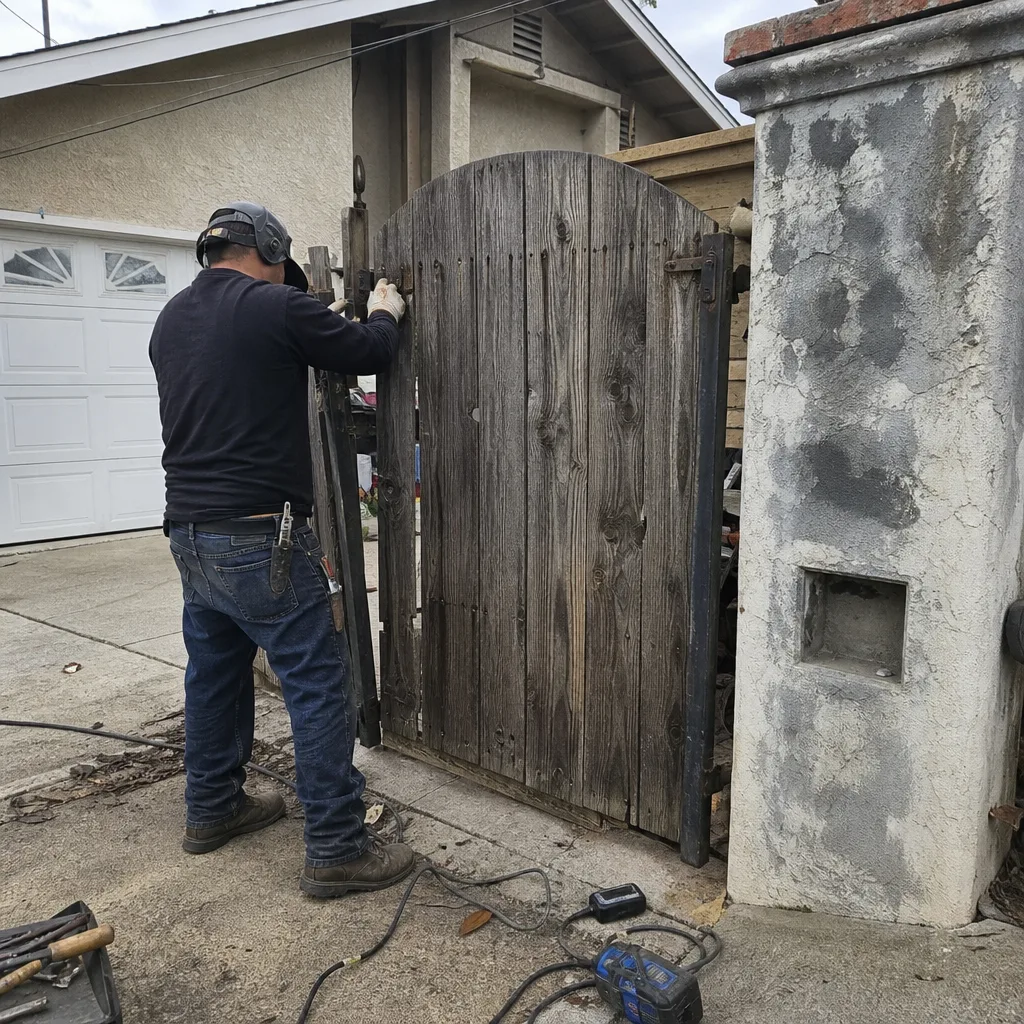 Before
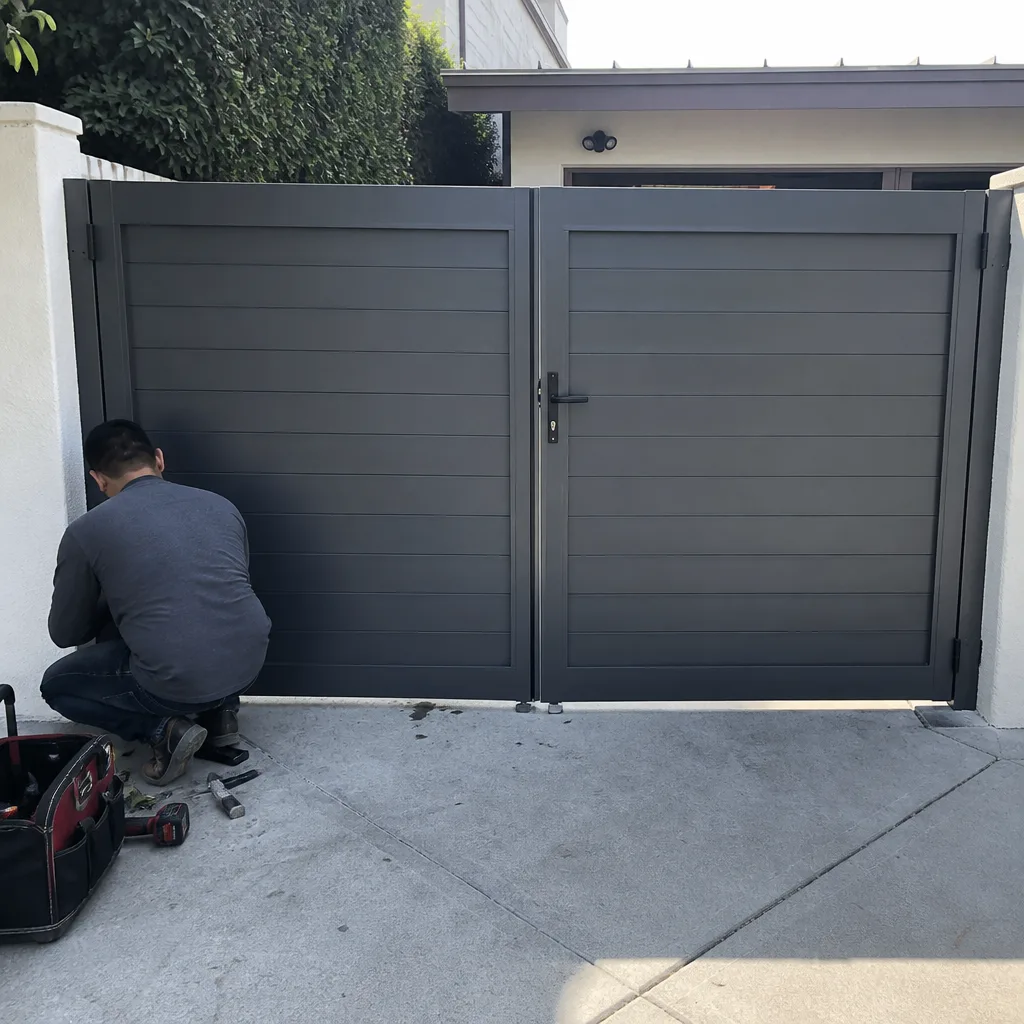 After
AfterGate Repair Permits, Codes & Inspections in CA: What You Need to Know
An automated gate that closes on a child produces roughly 40 pounds of force. That’s enough to cause crush injuries, fractures, and in documented cases, death. California’s permit and inspection framework exists because those incidents happened, not because a bureaucrat wanted paperwork. Most homeowners in North Hollywood and across the state can’t tell you where the line sits between a maintenance repair and a permitted modification, and that gap is exactly where insurance denials and liability nightmares are born. If you’re unsure, see Gate Repair Warning Signs: A North Hollywood Homeowner’s Reference Guide. This guide covers what actually triggers a permit, what UL 325 demands, how Los Angeles County and City processes differ, and how to document your gate’s compliance so it protects you on paper, not just in the driveway.
Quick Answer
In California, most gate repairs (replacing a motor, a hinge, a wheel, or a circuit board) are classified as maintenance and do not require a permit. A permit is required when the work changes the gate’s structure, footprint, electrical service, or means of automatic operation. If you install a new gate operator, pour new footings, alter the gate’s height or setback, or run new electrical conduit, expect the building department to want drawings, a permit fee, and a final inspection before the gate is legal to operate.
Table of Contents
- Maintenance vs. Permitted Work: Where California Draws the Line
- UL 325 in Plain Language: What the Code Actually Requires
- LA County vs. City of Los Angeles: Which Jurisdiction Governs North Hollywood
- What an Inspector Will Check (Use This as a Hiring Checklist)
- Documenting Your Gate’s Compliance for Insurance and Resale
- How to Pull a Gate Permit in Los Angeles: Step by Step
- Common Mistakes to Avoid
- When to Call a Professional
- Frequently Asked Questions
- The Bottom Line
BeforeAfterMaintenance vs. Permitted Work: Where California Draws the Line
California’s trigger for a gate permit is not “anything that touches the gate.” The California Building Standards Code (Title 24, Part 2, the California Building Code) and the California Electrical Code draw a practical line between maintenance and modification that most contractors don’t explain clearly. Maintenance keeps the gate doing what it already did. Modification changes what it is.
Here’s the line, with examples we handle weekly in the North Hollywood gate repair market:
- Maintenance - no permit: Replacing a failed swing gate motor with the same voltage and the same mounting configuration, swapping out a worn hinge or wheel, replacing a photo-eye sensor, welding a cracked rail on an existing slide gate, adjusting limit switches, re-tensioning a Mighty Mule arm, replacing a remote receiver board.
- Modification - permit required: Installing a gate where none existed, adding a gate operator to a previously manual gate, changing from swing to slide operation, adding a pedestrian gate that alters the property’s access pattern, running new electrical service from the panel to the gate, altering setbacks or driveway apron dimensions.
- Gray zone - check with the building department: Replacing a hydraulic operator with an electromechanical one (different electrical profile), extending the gate’s height beyond its original construction, or adding a crash-rated barrier or bollard array to an existing commercial gate line.
The phrase to remember is “like-for-like replacement is maintenance; anything else is a modification.” Replacing a LiftMaster operator with a LiftMaster operator is maintenance. Replacing a manual wooden gate with a steel automated gate is new construction, and in Los Angeles County that means a building permit, an electrical permit, and a final inspection - even if the gate is on an existing track.
North Hollywood sits in an unincorporated temperature zone that matters for gate work in one specific way: the San Fernando Valley’s summer heat regularly pushes gate operator thermal sensors to failure in July and August, and a motor swap in August is exactly the kind of “same footprint, same voltage” repair that does not need a permit. We’ve replaced a dozen heat-killed Viking and FAAC boards in Valley Glen, Studio City, and North Hollywood this year without a single permit pulled, because the repair simply restored the gate to its previously approved condition.
UL 325 in Plain Language: What the Code Actually Requires
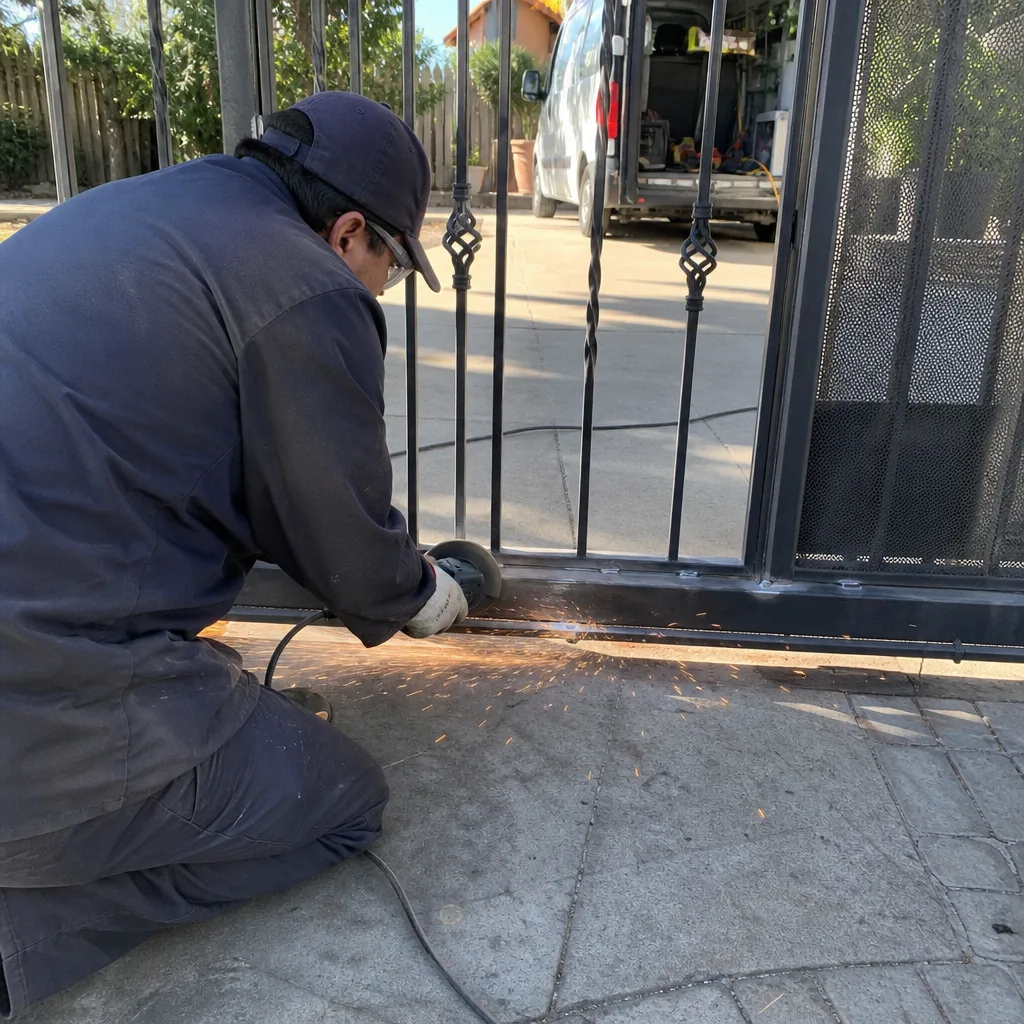
UL 325 is the national safety standard for automated gates. It is not a California rule; it is an Underwriters Laboratories standard that California adopts by reference through the building code. Any automated gate installed or materially modified in California must meet the current UL 325 revision, which means four primary entrapment protections depending on the gate’s type and installation class.
Here is what UL 325 requires in plain language:
- Inherent entrapment protection: The operator itself must be capable of sensing an obstruction and reversing direction. This is the motor’s built-in clutch or current sensor. If the gate hits something and the motor keeps pushing until it burns out, the operator is non-compliant, period.
- External entrapment protection device: At least one non-contact sensor (a photo-eye) or contact sensor (a safety edge) must monitor each potential entrapment zone: the leading edge of a swing gate, the trailing edge of a swing gate, and the bottom edge of a vertical lift gate.
- Gate construction standard: The gate itself must be built to ASTM F2200, which sets maximum opening sizes in the gate fabric, minimum clearance distances, and structural requirements designed to prevent pinch points. We see gates in North Hollywood that were welded in the 1990s with diamond-shaped mesh openings wide enough to admit a child’s hand - those gates are unpermitted today and cannot be automated.
- Warning signage: Two warning signs are required on every automated gate - one on each side of the gate, visible from the area the gate travels through. Sign text is prescribed: “MOVING GATE” plus warning language about entrapment risk.
What happens when a gate does not comply? Three things, and none of them are financial abstractions. First, the operator will not pass a UL 325 field verification if a new gate installation is inspected. Second, the homeowner’s insurance carrier can deny an injury claim on the ground that the gate was an unpermitted, non-code-compliant modification. Third, if the gate injures someone, the homeowner - not the installer - is the named party in most premise liability litigation. “The gate was here when I bought the house” is not a defense that holds up in California courts.
LA County vs. City of Los Angeles: Which Jurisdiction Governs North Hollywood
North Hollywood is a neighborhood within the City of Los Angeles, which means the Los Angeles Department of Building and Safety (LADBS) is the permitting authority - not Los Angeles County. This distinction matters because LA County and the City of LA have different fee schedules, different plan check processes, and different inspector availability. A homeowner who pulls an LA County permit for a property inside city limits has pulled a permit from the wrong agency, and the work will be flagged at resale or after any claim.
Here is what the City of Los Angeles process looks like for a typical automated gate installation in North Hollywood:
- Plan check: For any gate that includes an operator and new electrical, LADBS wants two copies of a site plan showing the gate’s location, swing path, adjacent driveway, and sidewalk clearance. For a residential swing gate on a single-family lot, the plan check may be same-day at the Van Nuys or Metro LADBS office. For commercial gates or gates within the public right-of-way, the plan check may require fire department review.
- Permit fees: An electrical permit for a gate operator in the City of LA typically runs between $180 and $400 depending on the scope of the electrical run. A building permit for a new gate structure adds another layer - plan check fees, permit fees, and a final inspection are all separate line items on the permit card.
- Inspection: The inspector looks for the UL 325 compliance points listed above, the electrical rough-in (conduit, conductor size, bonding), the gate’s setback from the sidewalk (typically 18 to 24 inches for a swing gate along a public sidewalk - enough that the gate’s arc does not extend over the public way), and the signage package.
- Final sign-off: The permit card gets a final inspection signature only after the operator is installed, wired, commissioned, and all entrapment protections are in place. No final sign-off means no legal operation, and insurance carriers in California are increasingly asking for permit final inspections in claim files.
For homeowners in the North Hollywood zip codes (91601, 91605, 91606), the fastest path is to call LADBS and ask one question: “Is my gate repair classified as maintenance or modification?” The counter staff can answer that in five minutes. It is a five-minute phone call that can save a $50,000 liability exposure, and almost nobody makes it.
What an Inspector Will Check (Use This as a Hiring Checklist)
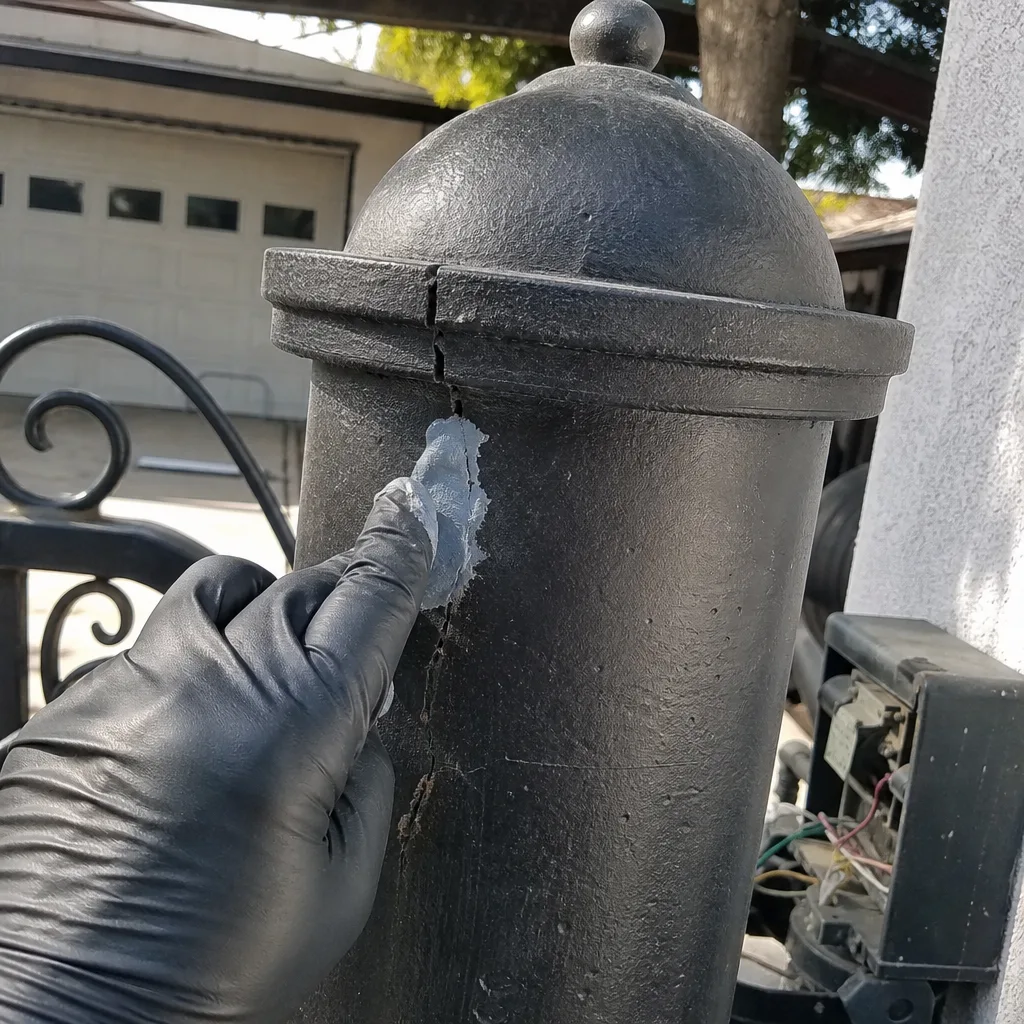
An LADBS inspector’s checklist for an automated gate installation is predictable. It is not a secret; it is printed in the plan check correction sheets. Here is the same list an inspector will walk through, written as a homeowner-facing audit you can use before you hire any contractor, including us:
- Permit card is posted and the plan set matches the field. If the gate’s location, height, or swing direction differs from the approved plan, the inspection stops there.
- Electrical is properly protected. Conductors must be in rigid or flexible conduit rated for direct burial; UF cable run bare through a garden bed is a correction item every time. Every outdoor circuit at a gate must be GFCI-protected at the source.
- Bonding and grounding are present at the operator. The metal gate frame, the operator chassis, and all conduits must be bonded back to the electrical service ground. Corrosion at the bonding lug in a North Hollywood gate post is a common correction we see - the Valley’s irrigation moisture and hard water accelerate it.
- Entrapment sensors are installed and adjusted. The inspector will block the photo-eye and verify the gate reverses. They will check that the photo-eye is mounted at the specified height (typically 6 to 30 inches above grade, depending on the gate class) and that it cannot be easily defeated by vegetation.
- The gate meets ASTM F2200 construction standards. No gap greater than 2 1/4 inches in the gate fabric at any point the gate travels, no exposed pinch points, and a bottom edge clearance that does not create a crush zone against the drive or curb.
- Warning signs are present and legible. Two signs, both sides, with the required text. Missing signs are the single most common correction.
- The operator’s force limit has been set and verified. This is the “2×4 test”: a 4×4 post placed in the gate’s path must cause the gate to reverse before the force threshold is exceeded. Inspectors care about this because UL 325 field verification is now a code requirement, not a suggestion.
We hand every client in North Hollywood a copy of this checklist at the time of estimate, before any work starts, because a contractor who already knows what the inspector will check is a contractor who builds to that standard the first time. If the person you are interviewing cannot speak to all seven items, they are not going to pass an LADBS inspection without corrections.
Documenting Your Gate’s Compliance for Insurance and Resale
Here is the part almost no homeowner does, and it is the part that actually protects you. A gate that passes inspection is a fact on inspection day. A gate that is documented as compliant is a fact you can produce six years later, after the installer has gone out of business and the original permit card has faded in a garage drawer. Insurance carriers and escrow officers during a home sale will not reconstruct your gate’s compliance record from memory; they will ask for paper.
What to keep, in a folder, for the life of the gate:
- The permit card with the final inspection signature (if the work required a permit).
- The operator’s model number, serial number, and UL 325 compliance listing from the manufacturer.
- A written description of the entrapment protections installed at the time of commissioning: number of photo-eyes, number of safety edges, their mounting locations, and the operator’s force limit reading.
- Photographs of every sensor, every sign, and every electrical connection, taken at the time of the final inspection or the completion of the repair.
- The contractor’s invoice showing the scope of work, which doubles as the maintenance-vs-modification evidence if a claim or a code complaint is ever filed.
We do this as part of every job under the Vance Gate Repair North Hollywood home documentation standard: a written price before work starts, and a photo record of what was found, what was set, and what was installed when the technician leaves. That photo record has saved our clients from insurance adjusters who ask, “Can you prove the gate had working sensors before the incident?” Yes. Here are the photographs with date stamps and the sensor positions.
The reason this matters in California specifically is the state’s seller disclosure requirements. A seller must disclose known safety defects and unpermitted work. An automated gate that was installed without a permit and without UL 325 entrapment protection is a material disclosure item. If you fail to disclose it, you can be sued after close of escrow. If you did disclose it, the buyer can demand remediation or price adjustment. The documentation folder turns that sale-disrupting problem into a one-page answer.
How to Pull a Gate Permit in Los Angeles: Step by Step
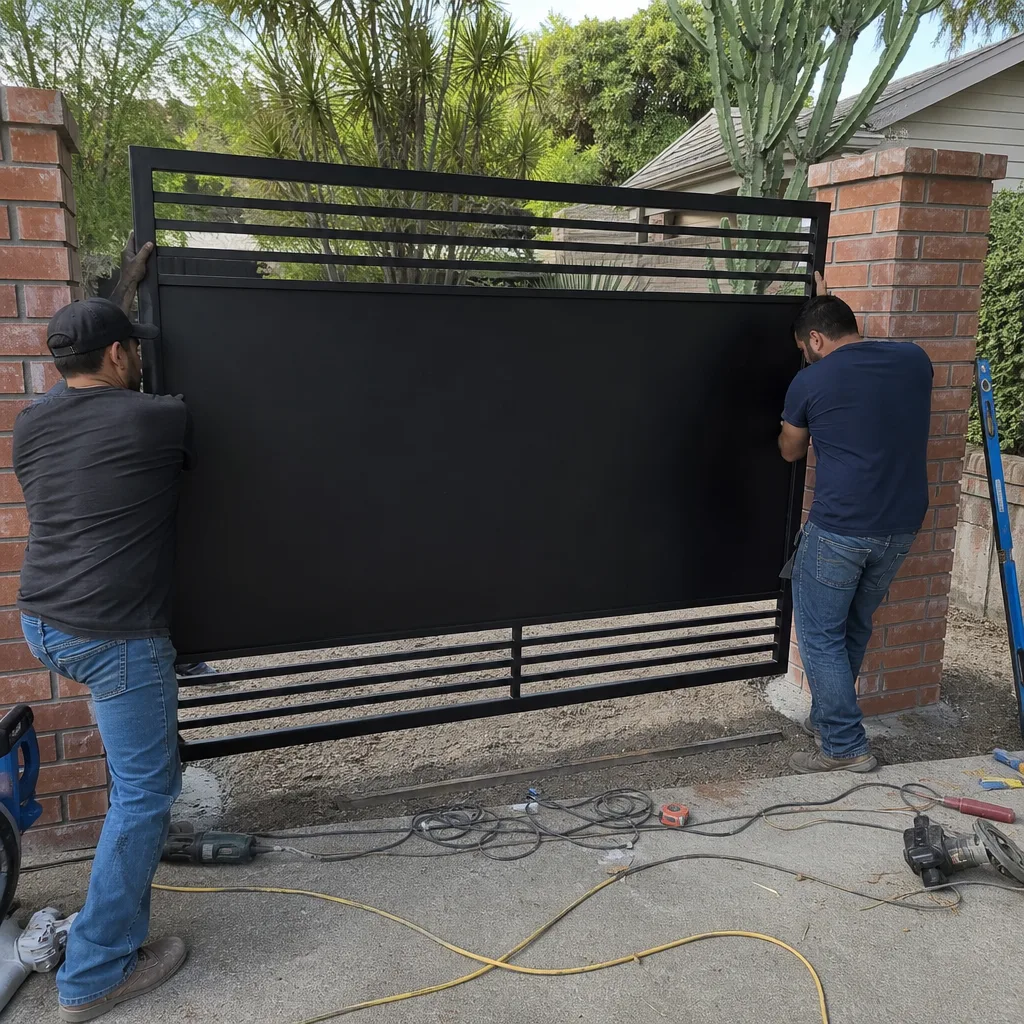
If you have determined that your gate work requires a permit, the process in the City of Los Angeles is not complicated, but it is sequential. Skipping a step means a rejected plan check and a wasted trip to the counter. Here is the order, from a contractor who has walked this path in North Hollywood more times than we can count:
- Verify your jurisdiction. Look up the property on the LADBS website. If the address is in a city within LA County that is not the City of LA (Burbank, Glendale, Pasadena), the LADBS does not issue the permit. North Hollywood addresses fall under LADBS.
- Prepare a simple site plan. A hand-drawn plan is acceptable for most residential gates if it shows the property lines, the gate’s location, the swing or slide path, the driveway width, and the distance from the gate to the nearest sidewalk or public way.
- Complete the permit application. LADBS uses the Express Permit system or the online permit portal. You will need the legal description of the property, the scope of work, and the operator model if the gate is automated.
- Pay the plan check fee and submit. For a straightforward residential gate, the plan check may be “counter plan check” - reviewed while you wait at the Van Nuys office. If it is routed to full plan check, expect one to two weeks.
- Receive the permit card. This is the document that must be posted at the job site. It lists each required inspection: electrical rough-in, gate structural, and final.
- Do the work to code. Everything in the UL 325 section above applies. The electrical must be done by a licensed electrician or under a licensed contractor’s electrical responsibility.
- Schedule and pass the inspection. Most residential gate inspections in LADBS are scheduled online. The inspector will walk the checklist in the previous section. If you pass, the permit card is signed final.
- Keep the signed card. Do not lose this. It is the single most important piece of paper in the compliance-folder system.
One note for North Hollywood homeowners specifically: the Valley’s summer heat means the final inspection on an automated gate is best scheduled before 10 a.m. The photo-eyes and thermal sensors that pass easily on a 70-degree morning can behave erratically on a 95-degree afternoon because the operator’s internal temperature sensor affects its force response. We schedule our final inspections in the morning for exactly this reason.
Common Mistakes to Avoid
- Assuming any gate work is permitted work. Most gate repairs are maintenance and need no permit. Pulling a permit for a like-for-like motor swap in North Hollywood is wasted money and several weeks of process. The correct question is “Does this repair change the gate’s structure, electrical service, or operation?” not “Do I need a permit for gate work?”
- Assuming no gate work is permitted work. The opposite error. Adding an operator to a manual gate, installing a new gate, or running new electrical are all modifications that require a permit. “I didn’t know” has been tested in California insurance litigation and it loses.
- Pulling an LA County permit for a City of LA property. North Hollywood is in the City of Los Angeles. The county permit is void for the jurisdiction and the work is unpermitted regardless of what the paperwork says.
- Buying a gate operator online and self-installing without entrapment sensors. UL 325 requires the sensors. The operator’s manual may not be emphatic about it. The inspector will be. And the homeowner’s liability when a gate without sensors hurts someone is not an abstraction; it is a claim.
- Ignoring the ASTM F2200 gate-construction standard. You cannot automate a gate that does not meet the construction standard. If the gate fabric has gaps wider than 2 1/4 inches or the bottom edge creates a crush zone, the operator installation will fail inspection. Fix the gate first.
- Hiring a contractor who will not provide a written scope and a written price. If the contractor cannot state in writing what they will do and what it costs, you have no documentation for insurance purposes and no basis for a code-compliance dispute if the inspection fails. A gate motor and opener contractor who works in Los Angeles knows the inspection standards; one who won’t write down the scope is hiding in the gray zone.
- Losing the final inspection sign-off. The signed permit card is your proof that the gate was legal. Keep it in the folder with the operator documentation. It is the difference between a clean escrow and a seller-disclosure dispute.
When to Call a Professional
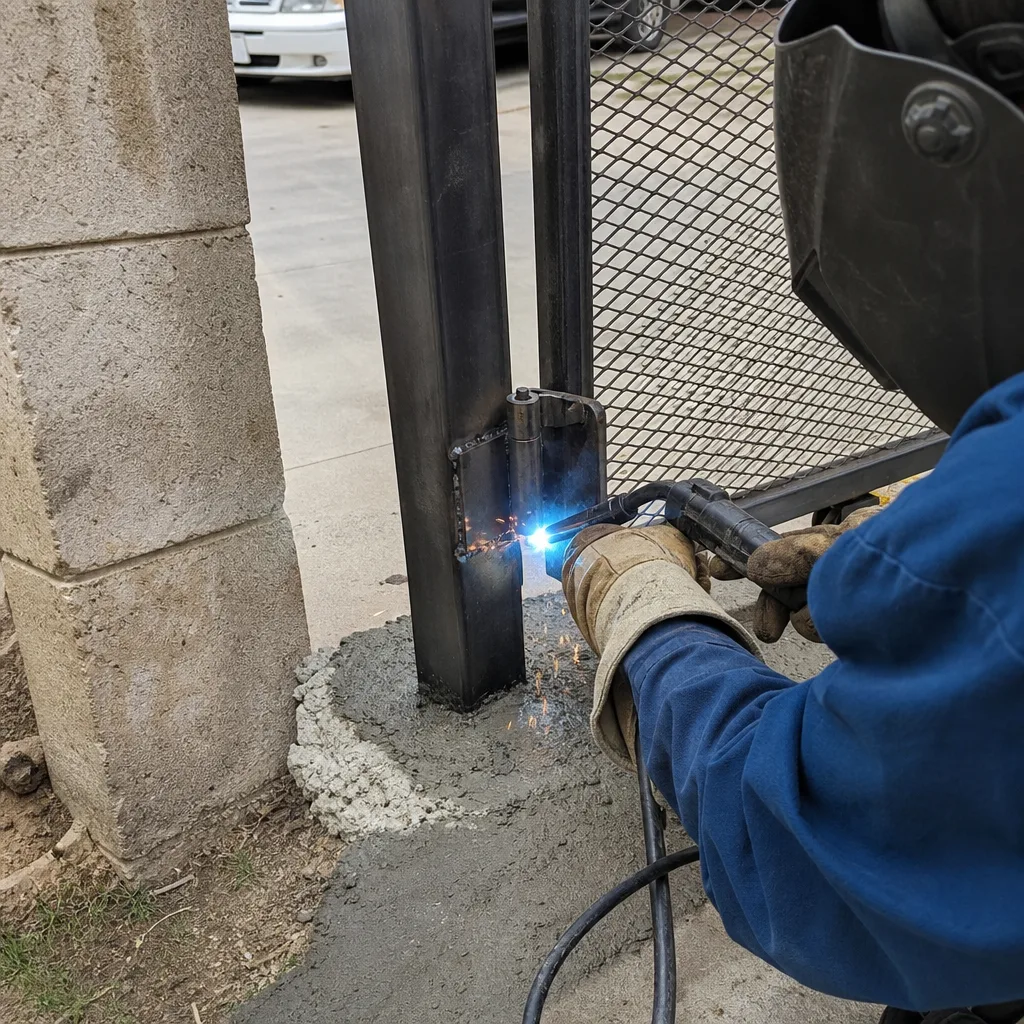
Call a professional when the gate work involves any of the following: installing a new operator, running electrical service, altering the gate’s structure, or any repair where you are unsure whether the work is maintenance or modification. For help choosing one, read our How to Hire a Gate Repair Contractor in North Hollywood: A Step-by-Step Guide. The wrong answer has a dollar figure attached to it, and that figure is not the cost of the repair - it is the cost of defending an insurance claim or negotiating a lower sale price at escrow because the gate was unpermitted.
Call a professional when the existing gate does not have entrapment sensors, or when the sensors are present but you do not know if they are adjusted correctly. Gate force settings and sensor alignment are not visual checks; they are measured adjustments. A photo-eye that looks fine can be misaligned by two inches and fail the UL 325 field test the day an inspector or an insurance adjuster runs it.
Vance Gate Repair North Hollywood offers free estimates in North Hollywood. Call (213) 566-1045 and we will tell you in writing whether your gate work is maintenance or modification, what the code requires, and what it will cost. The answer takes one visit.
Frequently Asked Questions
No, not for most repairs. Replacing a motor, hinge, wheel, sensor, or circuit board on an existing gate is maintenance and does not require a permit. A permit is required only when the work modifies the gate’s structure, electrical service, or means of operation - such as adding an operator to a manual gate or installing a new gate entirely. Call (213) 566-1045 if you want a written determination for your specific gate before you spend any money.
An electrical permit for a gate operator in the City of Los Angeles typically runs between $180 and $400, and a building permit for a new gate structure adds plan check and inspection fees on top of that. The total permit cost for a new automated gate installation is usually between $500 and $1,200 depending on the scope. That figure is separate from the contractor’s labor and materials.
UL 325 requires a residential swing gate to have entrapment protection on both the leading edge and the trailing edge, either contact sensors (safety edges) or non-contact sensors (photo-eyes), plus the operator’s built-in reversing mechanism. The gate itself must meet ASTM F2200 construction standards. Two warning signs are also mandatory.
Probably not if the injury is caused by a defect that a permit and inspection would have caught. California insurers routinely deny claims arising from unpermitted, non-code-compliant modifications, and the denial letter will cite the absence of a final inspection sign-off. The homeowner is then personally exposed to the injury claim.
You have two options. The first is to bring the gate into compliance voluntarily - pull a permit for the existing work, correct any deficiencies, and pass an inspection. The second is to disclose the unpermitted work when you sell and negotiate with the buyer. Most homeowners choose the first, because disclosure without remediation typically reduces the sale price by more than the cost of the compliance work.
Legally, yes - a homeowner can act as their own contractor on their primary residence. Practically, it is rarely done correctly. UL 325 compliance, ASTM F2200 gate construction, and the LADBS inspection checklist are not intuitive. A failed inspection costs more than the installer’s markup would have, and a non-compliant gate that injures someone is the homeowner’s liability regardless of who installed it. Call (213) 566-1045 for a free estimate.
The Bottom Line
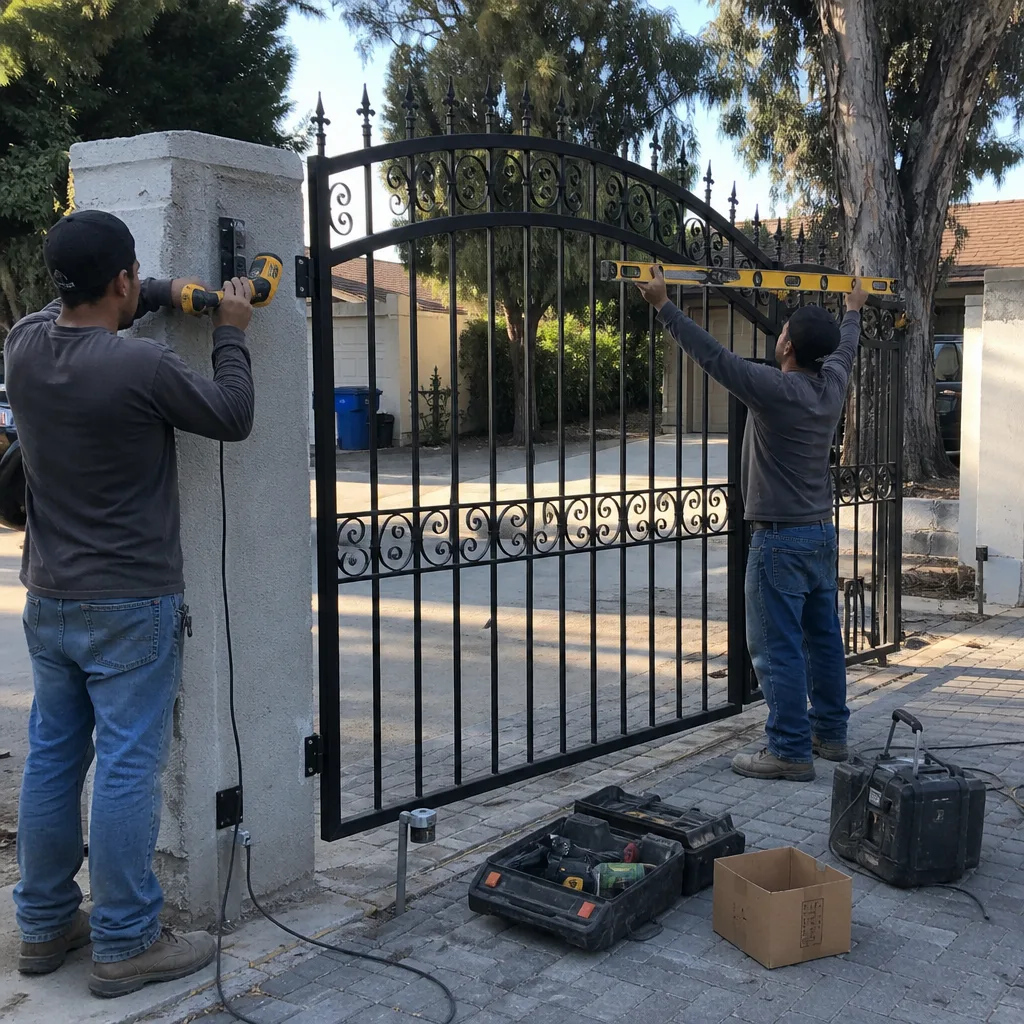
California’s gate permit rules are not bureaucratic noise. They are the state’s enforcement of UL 325 and ASTM F2200, two safety standards written in response to real entrapment injuries and deaths. The line between maintenance and modification is specific: like-for-like repair needs no permit; anything that changes structure, electrical, or operation does. Document everything - the permit card, the operator’s UL 325 listing, photos of the sensors, and the written scope from your contractor. That folder is what protects you at insurance time and at resale. If you are in North Hollywood and want a written answer about whether your gate work triggers a permit, gate installation or repair questions are answered free at (213) 566-1045.
Written by Adrian Vance, Owner at Vance Gate Repair North Hollywood, serving North Hollywood since 2014. Explore more guides & resources on our blog.