
Last updated September 20, 2026
Free on-site gate assessment - hinges, posts, and your LiftMaster or Nice gate operator checked before anything is quoted
The assessment is free and the quote is the invoice.


 Before
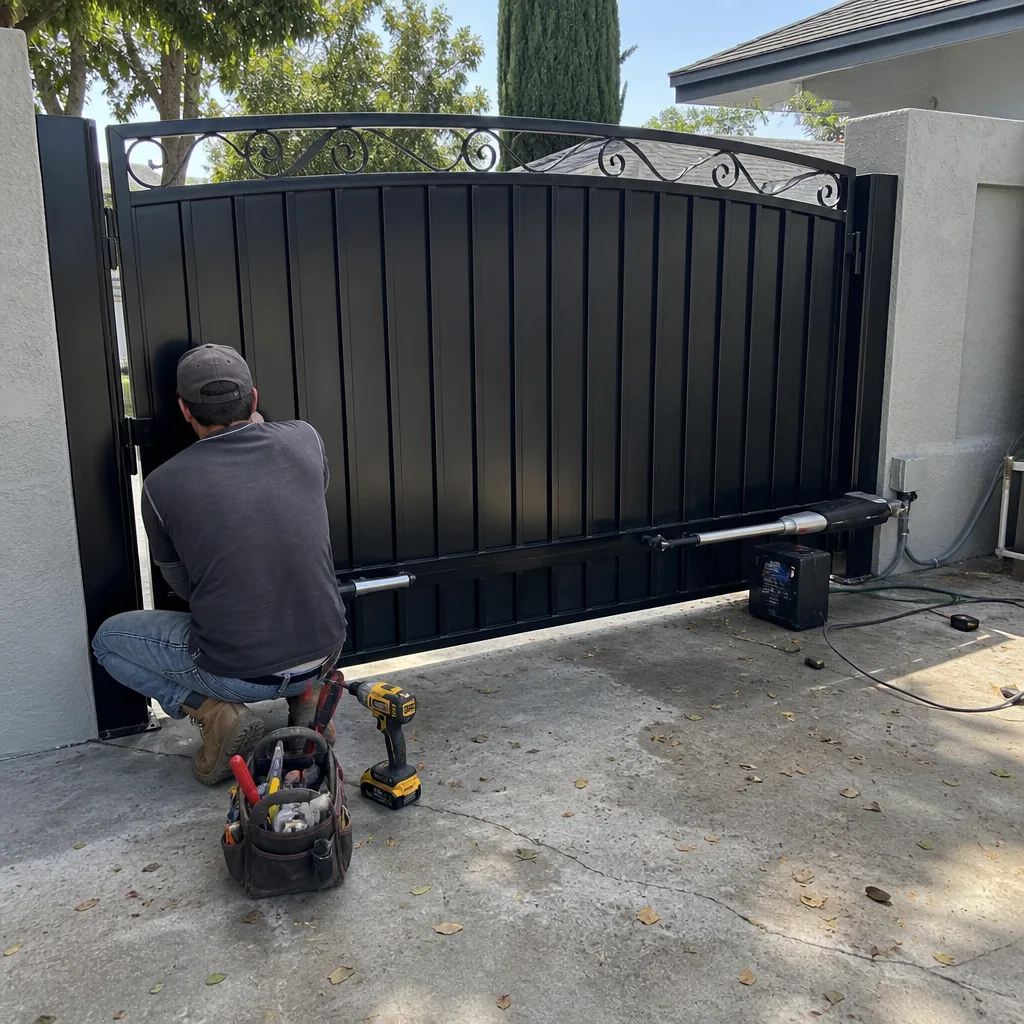 After
After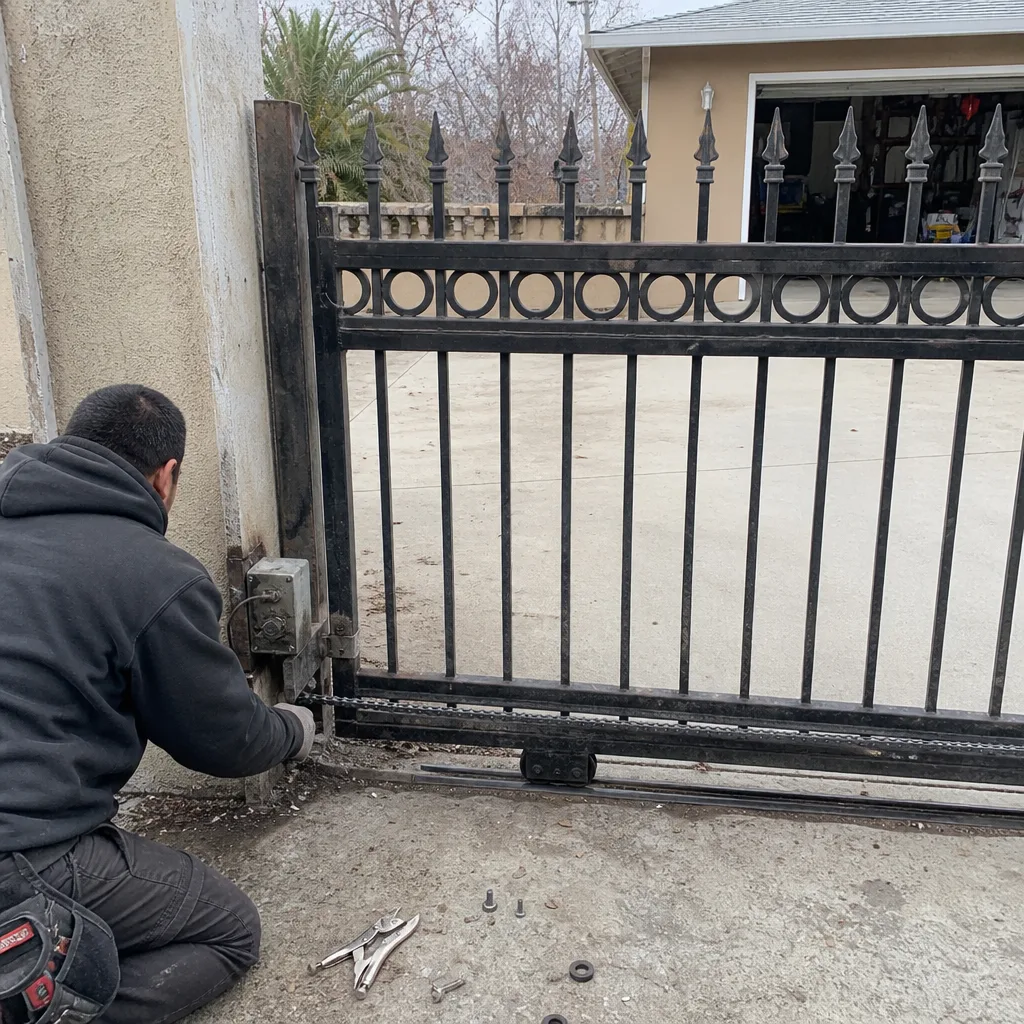 Before
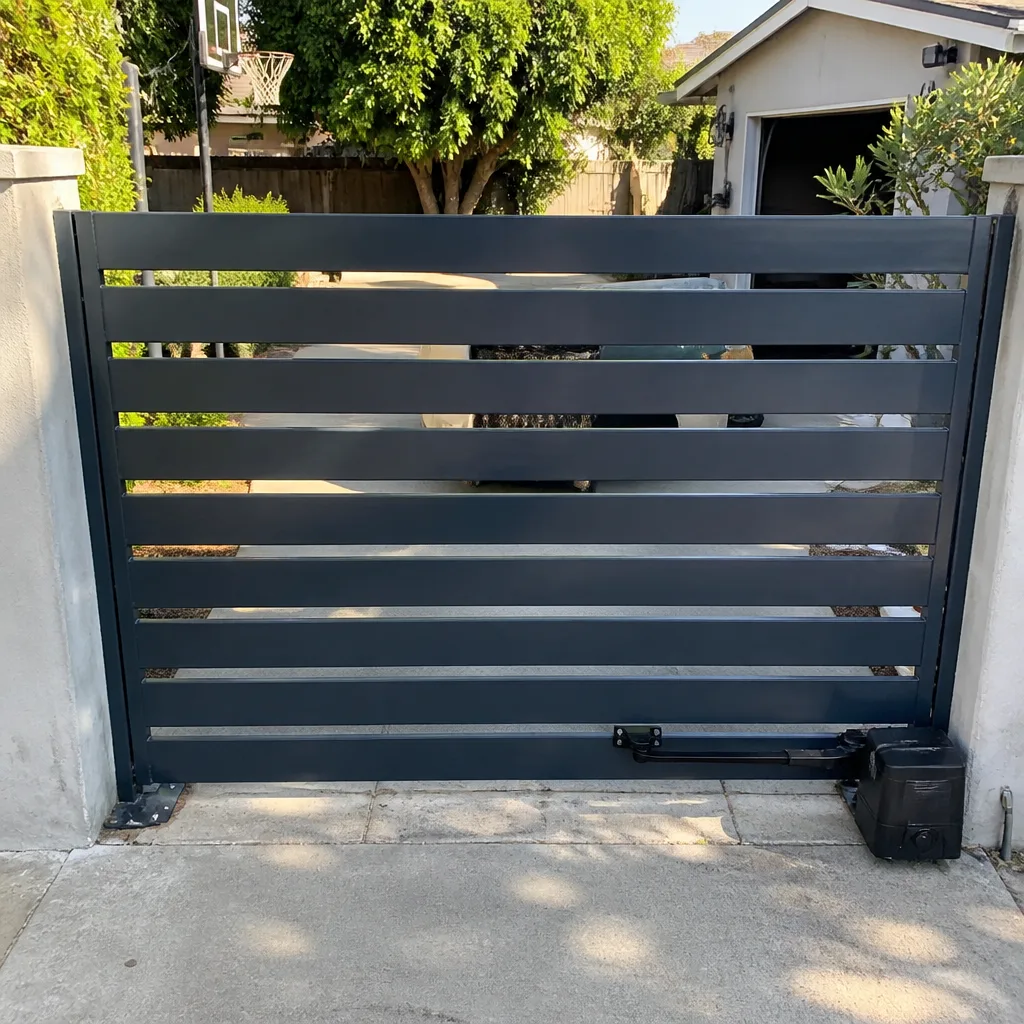 After
After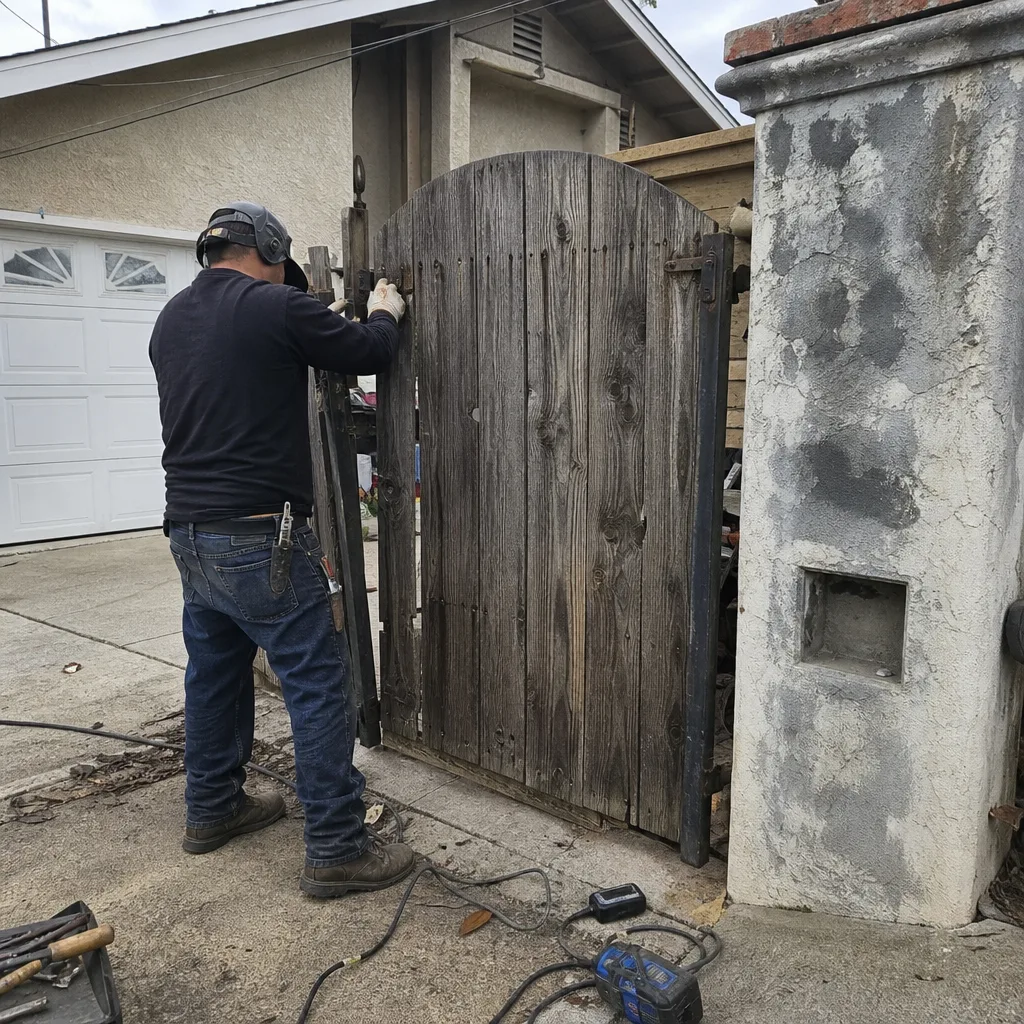 Before
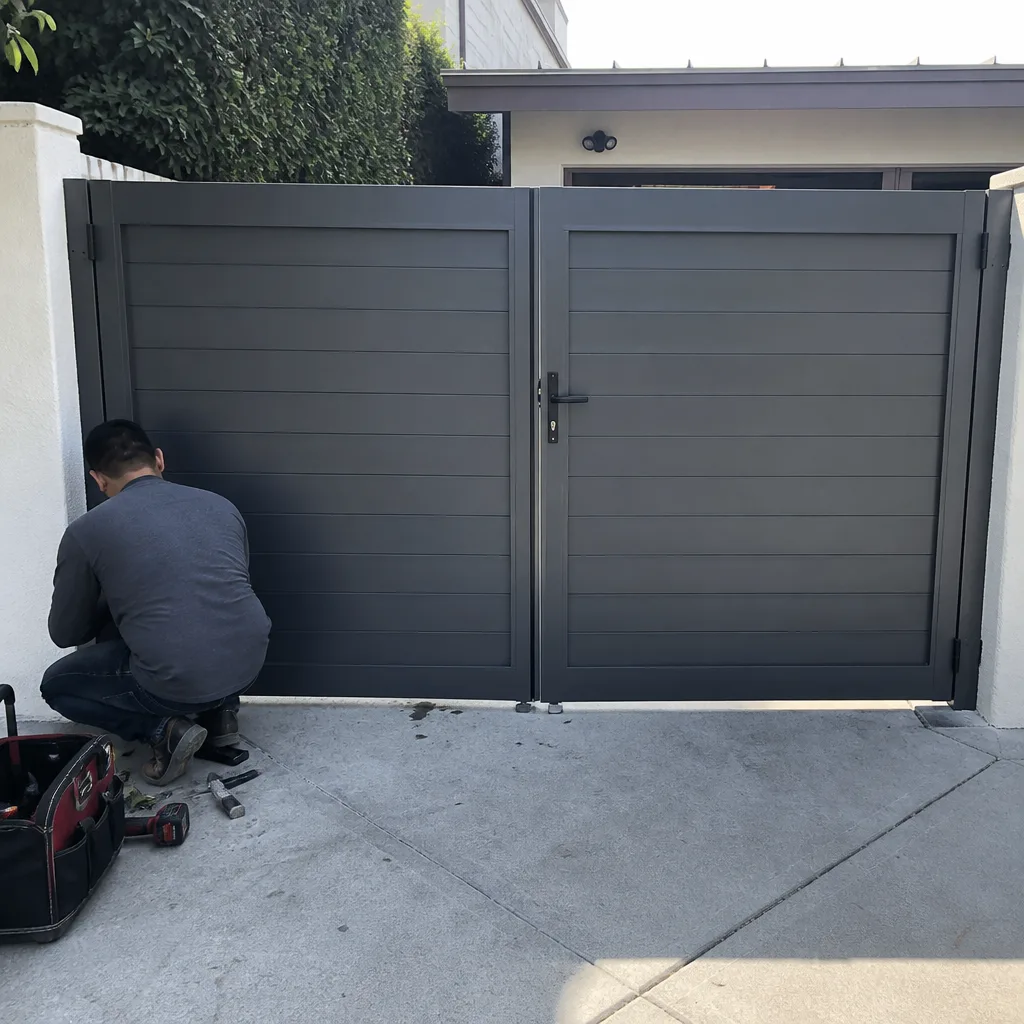 After
AfterGate Repair Maintenance Checklist for North Hollywood Homeowners
A gate maintenance checklist that tells you to “lubricate the chain” without naming a lubricant is worse than useless here. In North Hollywood, summer temperatures routinely pass 100 degrees, and the wrong grease breaks down into a gummy residue that traps windblown grit from the 170 freeway. Within a season you have a chain that binds, a motor that strains, and a repair bill that a functional checklist would have prevented. This guide is built around the idea that a checklist only works when it records actual measurements, actual product names, and a dated photographic baseline. You will leave with a step-by-step maintenance routine specific to the San Fernando Valley, including the torque numbers that tell you a drive chain is healthy and the photo angles that prove a photo-eye was aligned before anything drifted.
Quick Answer
A useful North Hollywood gate maintenance checklist records measurable baselines: drive-chain torque, limit-switch position photographed with reference points, photo-eye alignment verified with the beam’s diagnostic LED, and a dated lubricant log using a dry-film product rated for high heat. Perform this inspection every six months, or every three months if your gate faces the 170 freeway corridor. The goal is not a list of checked boxes; it is a document, with numbers and photos, that proves the gate was in spec on a specific date.
Table of Contents
- Tools and Supplies: What Actually Belongs on the Truck
- Lubricants That Survive a Valley Summer, and the Ones That Complicate It
- Drive Chain and Belt: The Torque and Tension Numbers That Matter
- Limit Switches and Photo-Eyes: Photographing the Baseline
- North Hollywood Specifics: Freeway Dust, Pool Interference, Settling Concrete
- The Record That Travels With the Gate: Turning a Checklist Into a Document
- Common Mistakes to Avoid
- When to Call a Professional
BeforeAfterTools and Supplies: What Actually Belongs on the Truck
Most homeowner checklists start with a vague instruction to “check the hardware.” A checklist that has a chance of producing a baseline starts with the right instruments on hand. The essential items are not expensive, and once purchased they last for years.
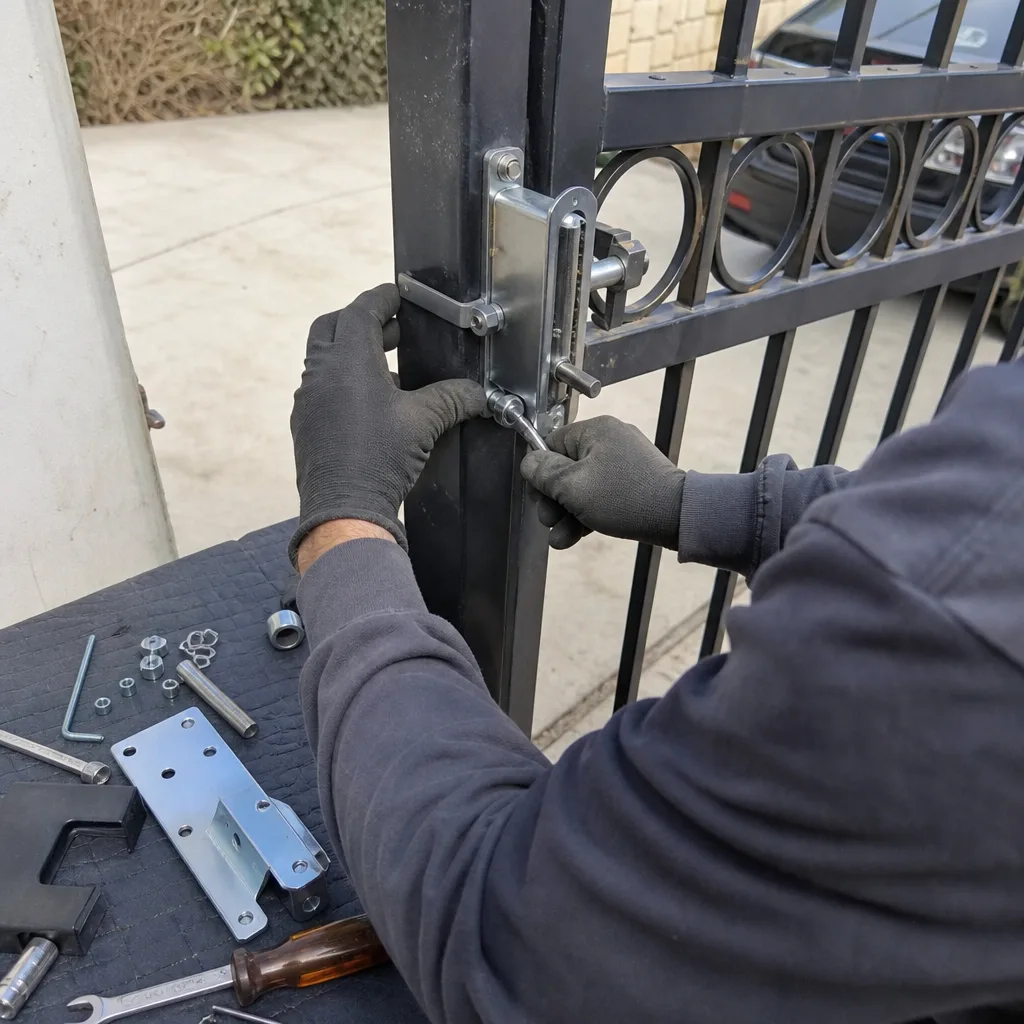
You need a torque wrench capable of reading foot-pounds, not the cheap beam-style wrench that lives in the bottom drawer. For a typical residential swing or slide gate in North Hollywood, the fasteners on the motor bracket, hinge bolts, and sprocket set screws will fall between 15 and 80 foot-pounds depending on gate size. A digital torque adapter, which fits between a standard ratchet and socket, will read accurately in that range without requiring a dedicated wrench for each value.
Beyond the wrench, assemble a set that covers the entire checklist:
- A cloth-tailed measuring tape or a set of feeler gauges for reading gaps and slack. A tape with a magnetic tip will annoy you less than one that slips.
- A marking paint pen or a fine-point Sharpie in a visible color. The paint pen survives weather; the Sharpie does not. You want something that stays legible for six months so the baseline marks remain readable.
- A smartphone camera with the timestamp setting enabled. The photo record you create is the single most valuable tool. Timestamp on the image is your evidence the baseline existed.
- A small, powerful flashlight. Half the components on a gate sit in shadow or inside a housing.
- A grease gun loaded with the product named in the next section if your gate has zerk fittings. A needle-tip applicator for the product applied as a spray makes far less of a mess.
- A multimeter only if you are, or plan to become, competent with low-voltage control wiring. The checklist here does not require it, but it earns its place the first week a gate operator fails to respond and the issue is a transformer feeding 0 volts to the relay.
If you are maintaining a gate that uses an automated operator from a brand like Ghost Controls, Mighty Mule, or Elite, note that each brand’s documentation will specify a fastener torque or a bracket clearance that is worth recording. Some use metric fasteners exclusively. A single metric socket set covers them; trying to force an SAE socket onto a metric bolt is how heads get rounded and how a maintenance task becomes a parts order.
The rule that governs all of this: if you cannot measure it and photograph it, the checklist entry is worthless. “Chain appears fine” is an opinion. “Chain measured 3/8 inch of deflection at 9 pounds of side pressure” is a record. That distinction drives everything that follows.
Lubricants That Survive a Valley Summer, and the Ones That Complicate It
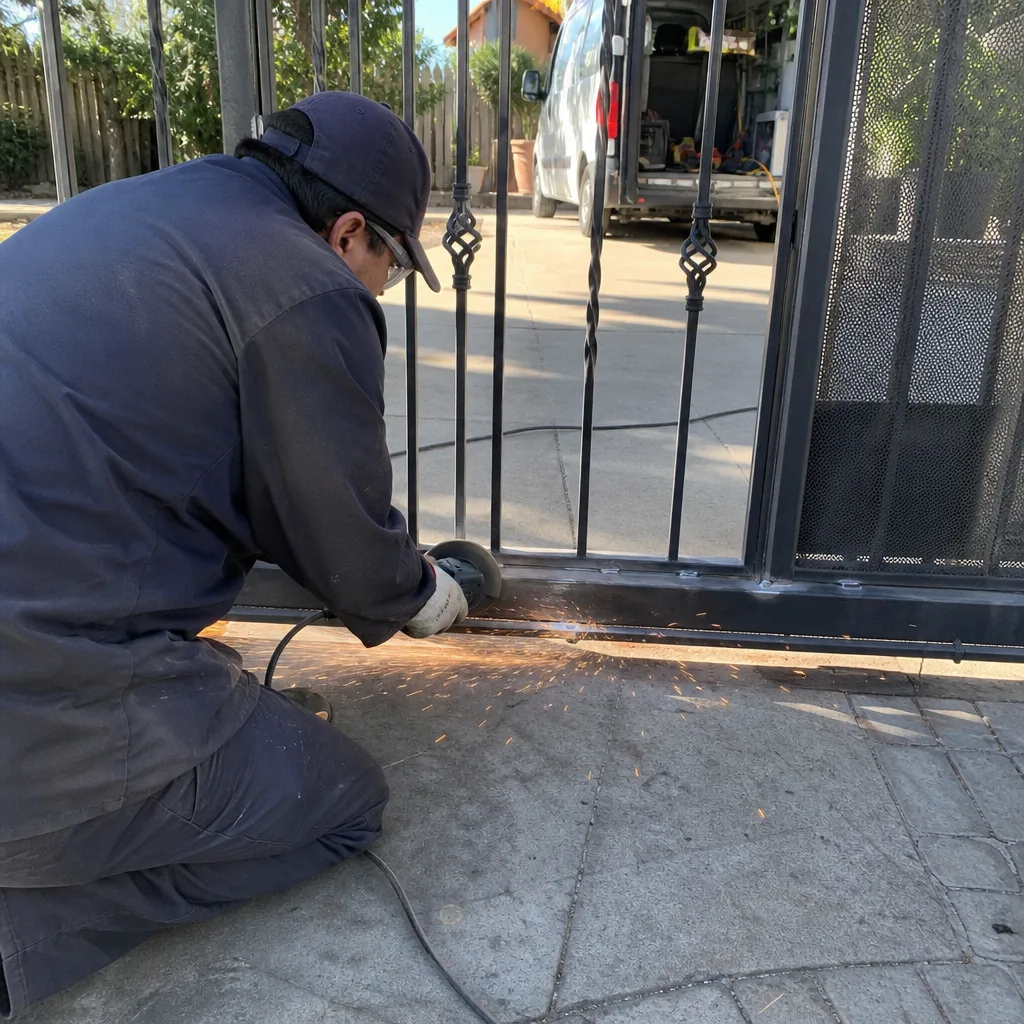
Here is the failure sequence we see in North Hollywood more often than any other maintenance-related call. A homeowner, acting on a generic gate checklist, sprays the drive chain with a thick, all-purpose grease. In July the ambient temperature crosses 100 degrees, the chain itself runs hotter, and the grease thins and migrates. Airborne dust from the 170 corridor settles on the wet film. By September the chain is coated in a gritty, abrasive paste that accelerates sprocket wear and, in some cases, causes the chain to ride up and skip. The homeowner calls a gate repair service not because of a component failure but because of a lubrication choice.
The fix is to use a product designed for high-temperature, dry-film application. Two products we have specified repeatedly and seen hold up through multiple Valley summers:
- DuPont Teflon Multi-Use Dry-Film Lubricant is a spray that goes on wet and dries to a non-tacky, wax-like film. It resists dust attraction. Reapply every four to six months on a chain that runs in direct sun.
- Blaster Advanced Dry Lube with Teflon performs similarly and is often easier to find locally in the North Hollywood area. The specific formulation matters less than the category: dry-film, not wet grease.
What about the classic recommendation to use white lithium grease on the gate hinges? White lithium has a place, but it is not the hinges in a San Fernando Valley summer. White lithium thickens in direct sun exposure and, over repeated heat cycles, become stiff enough that the gate operator works harder to move the leaf. Instead, use a dry-film or a molybdenum disulfide-based product on hinge pins. If the hinge is heavily loaded and you want the longest service interval, a marine-grade grease applied sparingly, then wiped so only a thin boundary film remains, is the compromise. The key is to avoid the build-up that traps grit.
For the threaded shafts inside a slide-gate or screw-drive operator, use the same dry-film approach. Heavy grease on a screw shaft in a dusty environment is a grinding paste waiting to happen. We opened an operator last year in Valley Glen, five minutes from the freeway, and the screw was packed with a gray compound that had more in common with grinding slurry than lubricant. The fix was solvent cleaning, an inspection of the shaft for wear, and a switch to a dry-film product. That gate has run quietly since.
Drive Chain and Belt: The Torque and Tension Numbers That Matter
This is where a real checklist separates itself from a home-maintenance article. A chain or belt does not simply need to be “tight.” It needs a measurable amount of deflection under a known force. And the fasteners that hold the sprockets, pulleys, and motor brackets need a measurable torque value recorded on the checklist.
Start with the chain on a typical residential slide gate. The real specification, which applies whether the motor is a DoorKing, Elite, or a Ghost Controls retrofit, is that a chain tensioned correctly will deflect roughly 1/4 to 3/8 of an inch when you press firmly with a thumb or a 5 to 10 pound force. Deflection of more than 3/8 inch under that pressure means the chain has stretched or a tensioner has backed off. Deflection of less than 1/8 inch, and the chain is over-tight, which loads the motor shaft bearings and shortens operator life.
The belt version of the same measurement, on a residential swing gate, is 1/4 to 1/2 inch of deflection under a light thumb press. Belts do not stretch the same way chains do, but they glaze and crack in sustained heat. If the belt shows cracks in the ribbed side, or if the surfaces contacting the pulley look polished and shiny rather than matte, it is approaching replacement. Do not wait for the belt to snap; the repair is predictable and costs less than the response call.
Torque values for the fasteners you will actually touch:
- Sprocket set screws on the drive shaft: 18 to 22 foot-pounds. Over-tightening strips the set screw or deforms the shaft; under-tightening lets the sprocket walk and the chain bind.
- Motor bracket bolts into concrete or steel posts: 30 to 40 foot-pounds depending on anchor diameter. If a socket slips on a bolt head, stop and note it on the checklist as a rounded fastener needing replacement. That is a recording task, not a reason to keep cranking.
- Hinge bolts on a swing gate leaf: 15 to 25 foot-pounds. These bolts often work loose from repeated cycling. On a gate that cycles 20 times a day, which is common for a North Hollywood household with two drivers and a school run, that is over 7,000 cycles a year. Bolts will move.
Record every value on the checklist along with the date. If the reading is unchanged six months later, the gate is stable. If the chain deflection has moved from 1/4 inch to 3/8 inch in six months, you now know wear is accelerating and can budget for a chain and sprocket set before it fails. That is the entire purpose of a baseline.
Limit Switches and Photo-Eyes: Photographing the Baseline
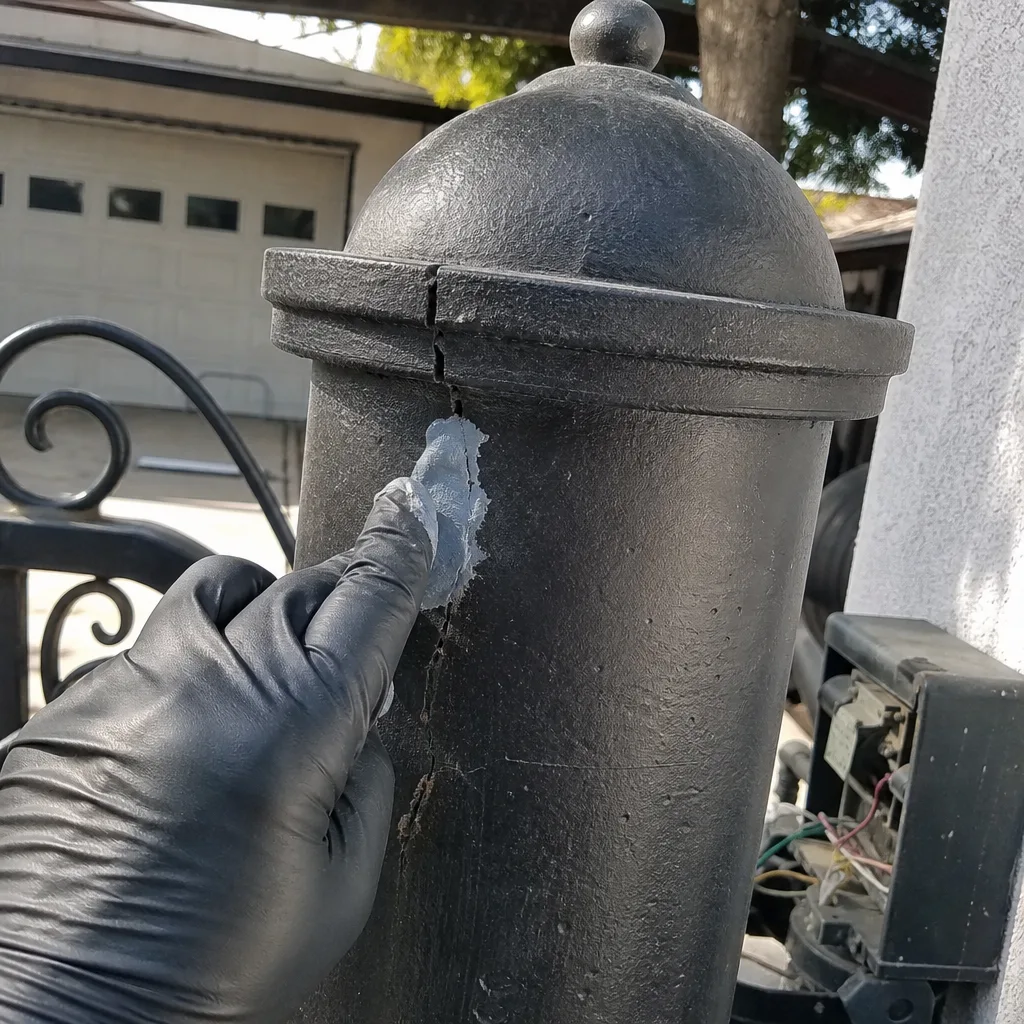
Limit switches and photo-eyes are the two parts of a gate system that drift slightly over time and cause symptoms that confuse a homeowner into replacing the wrong component. A gate that does not close all the way, or stops a foot short, or reverses for no visible reason is usually a limit-switch or photo-eye issue, not a dead motor.
The limit switch tells the operator where the gate stops. It is, in most residential systems, a small set of cams or a magnetic sensor inside the operator housing. When it is set correctly, the gate closes fully into the catch or stop and does not creep or slam. When it drifts, even a small amount, the gate under- or over-travels. The over-travel case is where the gate leaf slams into the stop and the motor strains against it. That is how operators burn out prematurely.
The baseline step is this:
- Open the operator housing (power disconnected at the breaker) and locate the limit actuator. On a Mighty Mule or Ghost Controls unit this is often a magnetic reed switch and a magnet mounted on the armature or rail.
- Mark the current position by photographing the magnet and the sensor from two angles, one close enough to read the position and one wide enough to show the entire assembly for context.
- Write the gap in the checklist, not as “small gap” but as the actual measurement. A feeler gauge or the edge of a marked tape will read 1/8 inch and that is the number.
Six months later the exact same photograph can be compared. If the gap has changed, you have caught a limit drift before it becomes a slamming gate. The same habit applies to gate motor and opener service, where we document the exact limit positions with a photo log and hand the homeowner a written record, so the next visit does not start from memory.
Photo-eyes, the infrared beams that sit on either side of the gate path to stop the gate if someone crosses, drift for a different reason. The housings are mounted low on posts or on the gate frame, where they absorb vibration, and the sun can soften the mounting brackets. We have seen a photo-eye in North Hollywood misaligned by less than two inches that irregularly prevented the gate from closing. The alignment was close enough that the beam made intermittent contact, and the homeowner could not reproduce the fault until we photographed it.
The checklist procedure for a photo-eye:
- Find the diagnostic LED on each eye. Most modern photo-eyes have a small LED that is solid when aligned and blinking or dark when the beam is interrupted or misaligned. Some brands use a two-color scheme.
- Photograph both LEDs showing the state. A photo that shows a solid green on the receiver is a record of correct alignment.
- Note the mounting bracket condition. If the bracket flexes under light pressure, it needs a shim or a replacement. A photo-eye mounted loosely will drift within a month.
- Test across the beam by breaking it with your hand while the gate is mid-cycle. The gate should stop or reverse. If it does not, the eyes need service or the wiring to the operator needs testing. Record the test result.
The photographic habit is what the Haven Standard in our own work formalizes: Clause 4 requires a documented photo record of every adjustment and every replaced part, so no future technician has to reconstruct the history. You can apply the same logic at home. Two minutes of photography per inspection saves a diagnostic visit later.
North Hollywood Specifics: Freeway Dust, Pool Interference, Settling Concrete
Manufacturer maintenance guides are written for a generic environment. North Hollywood is not generic. Four conditions in this part of the Valley deserve their own checklist items.
1. Freeway dust accumulation. The 170 freeway runs through North Hollywood, and any gate within a few blocks of the corridor collects dust that houses north of Burbank Boulevard simply do not see. The checklist item is not “clean the gate” but “clean the operator cooling vents and the photo-eye lenses.” Dust on a photo-eye lens degrades the beam; dust packed into the operator housing insulates the transformer and shortens its life. A soft brush and a low-pressure air source do the job. Perform this at every inspection if your property is adjacent to the freeway, and quarterly if the gate is in constant wind.
2. Pool equipment interference. Many homes in the North Hollywood area have pools with salt-chlorine generators or pump timers on the same side of the property as the gate operator. The checklist item here is to verify the gate responds normally when the pool pump starts. Variable-speed pool pumps, in particular, can produce electrical noise or in-rush current dips that briefly affect a gate operator on a shared circuit. The test is simple: note the time the pool pump cycles and observe the gate at that time. If the gate operator behaves oddly only when the pump is running, the issue is power quality, not the operator. Our gate installation work in North Hollywood routinely includes a check of what else shares the circuit. It is a sixty-second test that prevents a mystery.
3. Uneven concrete settling. The soil in the Valley shifts with wet winters and dry summers. Concrete driveways and gate posts settle, and the gate leaf that swung smoothly in January may drag on the driveway by August. The checklist item: measure the clearance under the gate at both the hinge end and the latch end. Record both numbers. If the latch-end clearance drops to less than 1/4 inch, the post or the slab has moved and the gate will soon scrape. A scraping gate loads the operator and the hinges, and the fix, when caught early, is a shim or a hinge adjustment. Caught late, it is a post replacement and a concrete patch.
4. Panel fading and powder-coat degradation. This one sounds cosmetic but has a structural dimension. A black or dark-colored steel gate in direct Valley sun can reach a surface temperature far above the air temperature. Over time the powder coating degrades, micro-cracks open, and moisture against bare metal starts oxidation. The checklist item: photograph and note any area where the coating has chipped, cracked, or faded to chalk. Touch-up paint, applied early, is a five-dollar fix. Replacing a rusted rail or panel is a welding job. A local gate service can tell the difference in five seconds. If you see rust staining around a weld, treat it as structural, not cosmetic.
Each of these four items belongs on a North Hollywood-specific checklist, and none of them appears in a manufacturer’s maintenance manual. That is the entire reason to localize this document.
The Record That Travels With the Gate: Turning a Checklist Into a Document
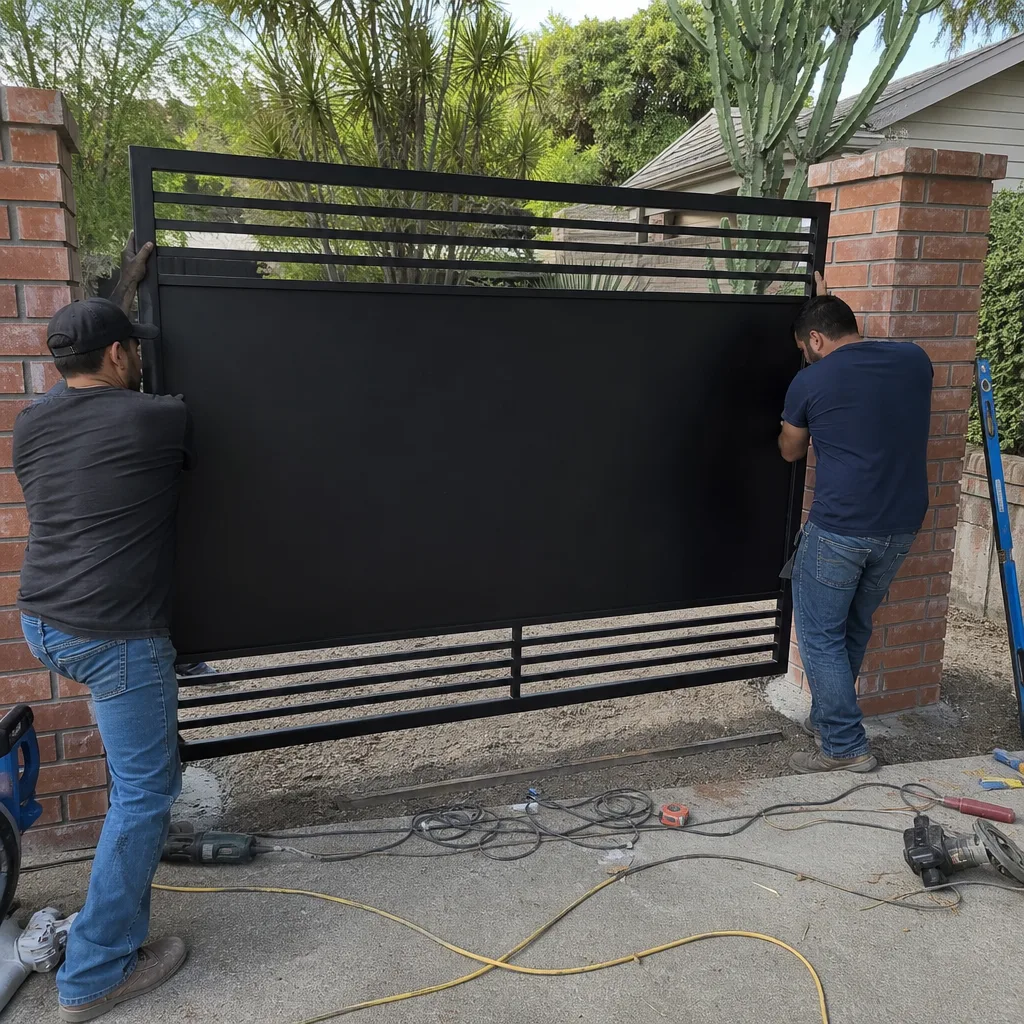
A completed checklist is not a maintenance record. A maintenance record is what a careful owner hands to a buyer when the house sells, or to a technician when a problem appears. And the difference is simple: a record is dated, measured, and photographed.
The document you want to produce, each time you complete the inspection, is a single page that includes:
- The date and the condition. Not “good” but “chain deflection 1/4 inch at thumb pressure, sprocket fasteners at 20 foot-pounds, photo-eye LED solid green.”
- The products used. The exact lubricant name and the date it was applied. If a different product replaced it, note the reason.
- The photo set. At minimum: limit switch position, photo-eye LED, chain or belt tension, under-gate clearance, and any area of coating damage. Add a wide shot of the full gate at the end so a future reader can orient the close-ups.
- The work performed. If nothing was adjusted, write that. “No adjustments made” is a meaningful statement. It tells the next reader the gate was stable on that date.
- The next interval due. Six months, or three months if the gate is on the freeway side or the equipment is older.
Store the record where a future homeowner or technician will actually look: inside the operator housing cover, in a weatherproof pouch, alongside the original installation paperwork. A plastic zipper document bag with the checklist folded inside has survived multiple rainy seasons on jobs we have documented.
When the gate eventually fails, and it will eventually fail, the service call goes differently. The technician opens the housing, finds the records, and starts with a baseline instead of a blank slate. That is a shorter diagnostic visit, a more accurate price, and no second trip to re-discover what the previous owner already knew. It is also, not incidentally, a selling point if you put the house on the market. A property with a documented gate maintenance history is in better shape than a property with an unseen, unphotographed gate. Realtors notice.
If you maintain more than one gate, or you manage a small multi-unit property in North Hollywood, the same process scales. One file per gate, updated on a schedule. The Vance Gate Repair North Hollywood home page covers the broader service area, but this documentation habit is something we advise on every job we finish, because it costs the owner nothing and it prevents repeat diagnostics.
Common Mistakes to Avoid
- Using a heavy, wet grease on the chain. In San Fernando Valley heat it migrates, attracts freeway dust, and becomes an abrasive paste. Use a dry-film lubricant and wipe away excess.
- Recording “fine” instead of a number. Fine is not a measurement. A future reader cannot compare fine to anything. Write the deflection, the torque, the clearance.
- Skipping the photo-eye because the gate opens and closes. An intermittent misalignment can pass the daily use test and fail only when a car approaches from a specific angle. Photograph the LED, note the state, and test across the beam.
- Overtightening fasteners to be safe. A stripped set screw or a snapped bolt created by overzealous torque application is a worse problem than the loose fastener it replaced. Torque values exist for a reason.
- Ignoring under-gate clearance until the gate scrapes. In North Hollywood’s shrink-swell soil cycle, clearance changes annually. Wait until the scraping begins and you have accelerated hinge wear and a stressed operator.
- Not keeping the record where the gate lives. A maintenance notebook in a kitchen drawer is useless when the gate fails at 10 PM and a new technician opens the housing. Keep the record in a weatherproof pouch inside the operator cover.
- Using painter’s tape or temporary labels as long-term marks. They fail in sun and rain. A paint pen mark, photographed and dated, survives. If you must label a connector, use heat-shrink or a metal-embossed tag.
When to Call a Professional
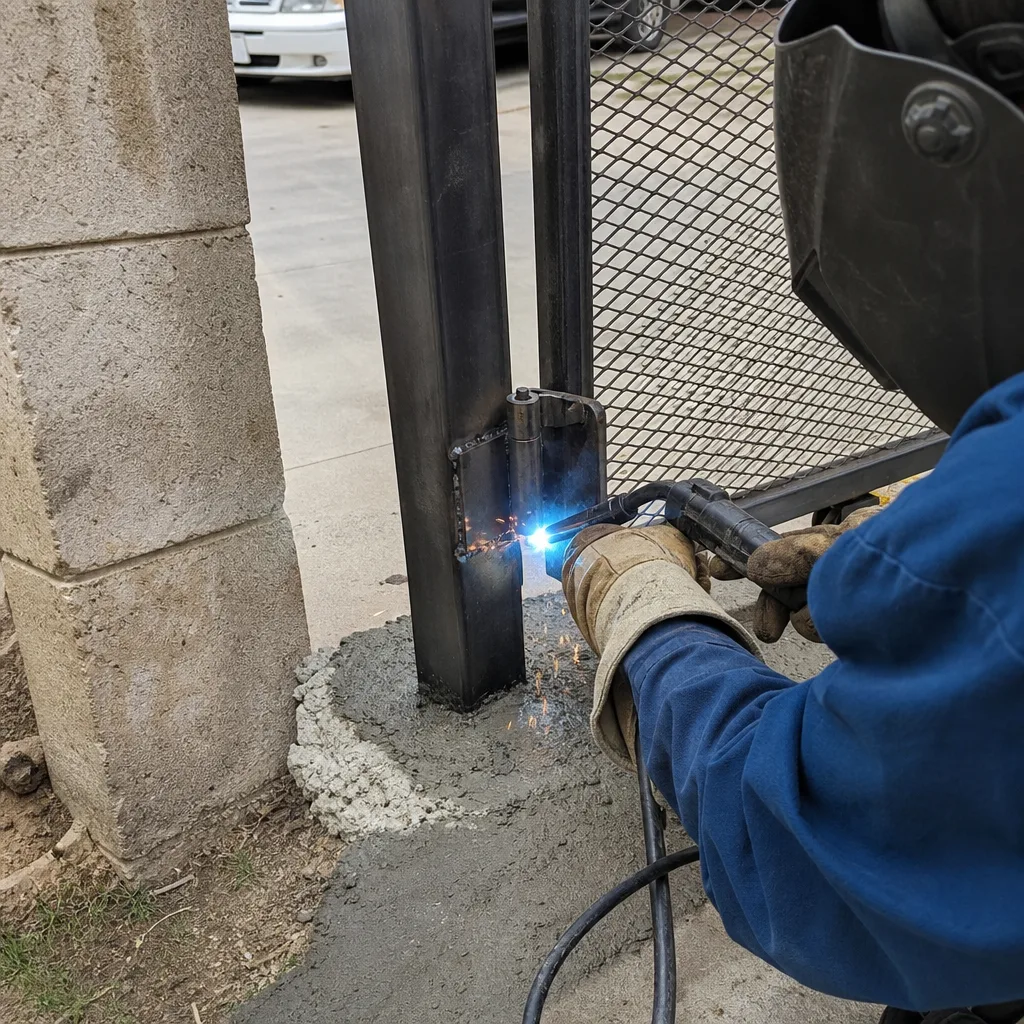
Some checklist findings are records, and some are work orders. Call a professional when you document a chain deflection beyond 1/2 inch, a belt with visible cracking, a photo-eye that will not hold alignment after adjustment, or a torque value you cannot bring into spec without risking a fastener. Also call if you replace a part and the gate behaves differently than it did before. A gate that reverses randomly, pauses, or refuses to close after a battery change or a limit adjustment likely has a wiring or a logic-board issue that a meter solves faster than a guess. Vance Gate Repair North Hollywood offers our Gate Repair services with free estimates in North Hollywood. Call (213) 566-1045 and describe what your checklist shows; a written price follows before any work begins.
Frequently Asked Questions
Every six months for most gates; every three months if the gate faces the 170 freeway or sits within a block of it. The check is fast once the baseline is recorded. Call (213) 566-1045 if you would rather have a technician establish the initial baseline for you.
A dry-film lubricant such as DuPont Teflon Multi-Use Dry-Film Lubricant or Blaster Advanced Dry Lube with Teflon, applied sparingly and wiped after application, resists the dust and heat degradation that make wet greases fail. Avoid all-purpose greases that remain tacky.
The date, measured values for chain deflection and bolt torque, a note of the lubricant used, photographs of limit-switch and photo-eye positions, and a statement of any adjustments or the explicit note that none were made. Keep it with the operator housing.
The most likely cause is a photo-eye that is marginally misaligned or a limit switch set slightly past travel, so the gate thinks it has met an obstruction or reached its stop too early. Photograph the LED state and the limit position, then compare to your last baseline.
Yes. Dust from the freeway concentrates on properties close to the corridor, coating photo-eye lenses and packing into operator housings, where it insulates transformers and shortens component life. Clean lenses and vents every inspection, and quarterly if you are close to the freeway.
Yes. Vance Gate Repair North Hollywood provides a written price before any work begins on every job, under Clause 1 of the Haven Standard. Estimates are free. Call (213) 566-1045.
The Bottom Line
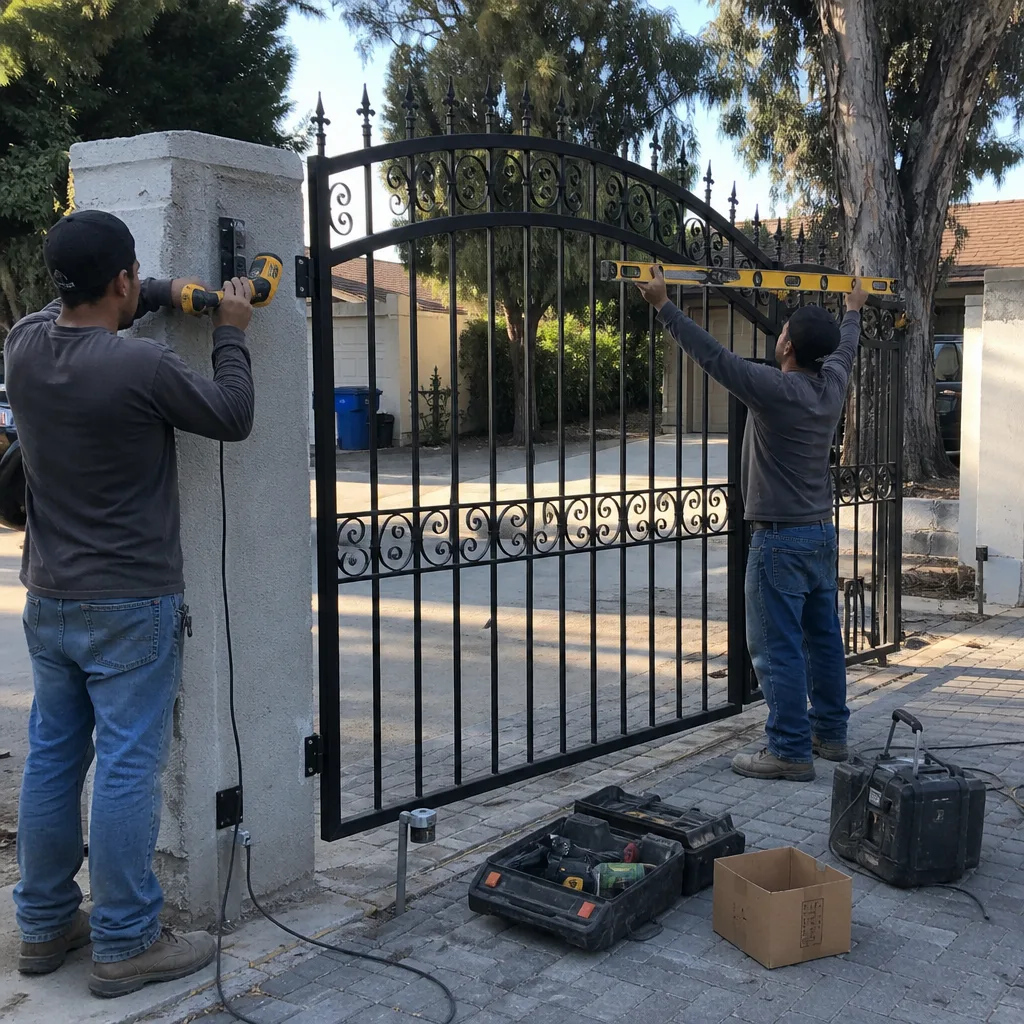
A gate maintenance checklist in North Hollywood earns its keep only when it produces a dated, measured, photographed baseline: chain deflection in inches, fastener torque in foot-pounds, photo-eye LED state, lubricant name, and under-gate clearance. That baseline turns six-month inspections into a comparison, not a guess. It catches a photo-eye drifting, a chain stretching, a post settling, and a coating failing before any of them become a Saturday-morning emergency. Use a dry-film lubricant rated for high heat, photograph everything, and store the record inside the operator cover. Browse more guides & resources on gate maintenance. If a finding is beyond a torque reading, call (213) 566-1045 and get a written price before the repair starts.
Written by Adrian Vance, Owner at Vance Gate Repair North Hollywood, serving North Hollywood since 2014.